Most people don’t spend much time thinking about what happens between the water line and the glass sitting on the kitchen counter. You turn on the faucet, fill the glass, and move on. It’s only when the water tastes strange, leaves marks on cookware, or doesn’t seem as fresh as it should that filtration suddenly becomes interesting.
And then comes the tricky part: there are a lot of choices.
Pitchers, faucet filters, countertop units, reverse osmosis systems, refrigerator cartridges, under-sink equipment—the list goes on. It can feel like choosing a phone plan, except nobody wants to spend an afternoon comparing filter specifications.
The good news is that choosing the right system doesn’t have to be complicated. Start with your water, think about how your household uses it, and choose a system that solves the problem without creating a new chore.
Start by Understanding Your Water
Before choosing equipment, figure out what you’re trying to improve.
Water can contain minerals, sediment, disinfectants, metals, microorganisms, and other substances. Some affect taste or odor. Others contribute to scale or staining. Some can’t be detected by sight, smell, or taste at all.
Testing can help identify characteristics such as hardness, pH, iron, manganese, and other relevant factors. The appropriate testing depends on your water source and the concerns you’re trying to investigate.
One measurement that may come up is dissolved solids. This term describes the combined amount of various dissolved substances in water. A high total dissolved-solids reading doesn’t automatically mean the water is unsafe, but it can provide useful information about water chemistry.
That distinction matters. A number is a clue, not a diagnosis.
Decide Where You Actually Need Filtration
Not every household needs to filter every gallon of water.
If your main concern is drinking and cooking, point-of-use treatment can be practical. Instead of treating water for showers, toilets, and laundry, you focus treatment where consumption occurs.
This is one reason undersink systems are popular. Installed beneath the kitchen counter, they can connect to a dedicated faucet and provide filtered water without taking up valuable countertop space.
For many households, that’s a nice compromise. The system stays out of sight, the drinking-water faucet remains convenient, and replacement filters can generally be accessed when needed.
Of course, the right setup depends on the available cabinet space and plumbing configuration.
Refrigerator Water Deserves a Little Thought
Modern refrigerators often have built-in water dispensers and ice makers, so filtered refrigerator water has become part of everyday life.
If you primarily drink from the refrigerator, consider fridge/ice filtration as part of your overall water strategy.
Refrigerator filters can improve taste and odor depending on their design and certification. But they have a limited service life, and replacing them on schedule matters.
An overdue filter isn’t something to ignore just because the water still looks clear.
Check the manufacturer’s replacement recommendations and pay attention to changes in taste or flow. A sudden reduction in dispenser flow can sometimes be a sign that the filter is becoming clogged.
Carbon Filtration Has a Practical Role
Activated carbon is widely used in drinking-water filters, particularly when taste and odor are concerns.
Carbon can reduce chlorine and certain organic compounds, depending on the filter design and water conditions. This can make a noticeable difference in drinking water, especially for people who dislike the taste of treated municipal water.
But carbon isn’t a universal contaminant remover.
If testing identifies a specific dissolved substance that requires a different treatment technology, simply adding more carbon isn’t necessarily the answer.
The best filter is the one designed for the problem you’re actually trying to solve.
Reverse Osmosis Goes Further
Reverse osmosis is another option for homeowners who want more extensive drinking-water treatment.
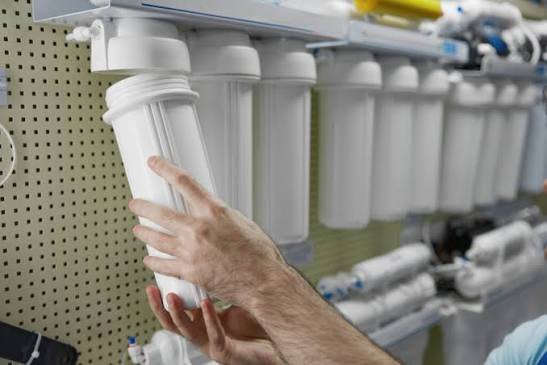
An RO system uses a semipermeable membrane to reduce many dissolved substances. Depending on the system, several filtration stages may be used before and after the membrane.
RO can be useful when water testing identifies treatment goals that go beyond basic taste and odor improvement.
There are trade-offs, though. Reverse osmosis systems require maintenance, including filter and membrane replacement. They also need appropriate water pressure and a suitable installation location.
For some kitchens, that’s completely worthwhile. For others, a simpler carbon-based system may be all that’s needed.
Again, let the water guide the decision.
Don’t Confuse Hard Water With Poor Drinking Water
Hard water is primarily associated with calcium and magnesium. It can cause scale on faucets, shower doors, cookware, and appliances.
A drinking-water filter may improve taste, but it isn’t necessarily designed to address hardness throughout the plumbing system.
If scale is the main complaint, a whole-home softening system may be more appropriate than installing increasingly elaborate filters under the kitchen sink.
This is an important distinction because water treatment works best when each technology has a defined purpose.
Trying to make one filter solve every household water issue can become expensive quickly.
Consider Your Kitchen Before Installation
A filtration system needs to fit the way you use your kitchen.
Look underneath the sink before choosing equipment. Is there enough room for a filter housing or storage tank? Are plumbing connections accessible? Will the system interfere with cleaning supplies or garbage disposal components?
If you’re considering reverse osmosis, remember that some systems require additional space for a storage tank and drain connection.
The filter should also be accessible for maintenance. There’s nothing particularly satisfying about discovering that the cartridge needs changing and realizing you’ve packed the entire cabinet around it.
A few minutes of planning beforehand can prevent that.
Flow Rate Matters
Nobody wants to wait several minutes to fill a glass of water.
Filtration systems can affect flow, particularly as filters become loaded with sediment or when the system isn’t properly matched to household demand.
Pay attention to the manufacturer’s flow specifications and your existing water pressure.
If the kitchen faucet already has weak flow, filtration equipment should be selected carefully. Otherwise, a system intended to make your water better could make the faucet frustrating to use.
It’s a small detail, but small details are often what determine whether people actually use a system consistently.
Maintenance Is Part of the Purchase
The initial equipment cost isn’t the whole story.
Think about replacement filters, membranes, service requirements, and the availability of parts. A system that looks inexpensive initially may become less attractive if its replacement components are costly or difficult to find.
Keep a simple record of filter changes. If the system includes multiple stages, note which cartridge was replaced and when.
Don’t wait for water to taste bad before checking the filter. Some filters can become less effective without producing an obvious warning.
Be Wary of Overly Broad Claims
Water filtration advertisements can make impressive promises. But it’s important to read the details.
Ask what a filter is certified to reduce and under what conditions. Look for information about the contaminants or substances the system is designed to address.
No filter removes everything.
If you’re concerned about a particular contaminant, choose testing and treatment specifically suited to that concern rather than relying on a vague claim that the water will be “purified.”
Clear information is much more useful than impressive wording.
The Best System Is the One You’ll Actually Maintain
There’s no perfect filtration system for every kitchen.
A basic carbon filter may be enough for one household. Another may benefit from reverse osmosis. Someone else may need a refrigerator filter, an under-sink system, or a combination of drinking-water and whole-home treatment.
What matters is choosing based on the water, your household habits, your available space, and your willingness to maintain the equipment.
A good system shouldn’t complicate your morning routine.
You should be able to pour a glass, fill the coffee maker, make ice, and cook dinner without giving the filtration equipment much thought.
That’s ultimately the point of good drinking-water treatment: not having the fanciest system under the counter, but having water you trust, enjoy, and can easily keep that way.