Water is one of those household essentials that tends to disappear into the background. We use it for everything—making coffee, washing dishes, taking showers, doing laundry, filling a glass—and rarely give it a second thought.
Then the clues start showing up.
Maybe there’s a white film around the faucet. Perhaps the shower door seems impossible to keep clean. The coffee tastes a little different, or the water leaves an odd smell in the glass. Sometimes the issue isn’t dramatic at all. It’s just that appliances seem to need more attention than they used to.
These signs don’t necessarily mean your water is unsafe. They do suggest that something about the water may not be a good fit for your household. And before buying a complicated treatment system, it helps to understand what you’re actually trying to fix.
Start With the Water Itself
Water quality varies considerably from one home to another. Municipal supplies can differ by region, while private wells may pick up minerals from the surrounding soil and rock.
Testing provides a useful starting point.
Depending on the source and the concerns involved, a water test may look at hardness, pH, iron, sediment, chlorine and other characteristics. More specific testing may be needed when there is a concern about a particular contaminant.
The point isn’t to create a long list of everything that could possibly be in your water. It’s to identify the things that matter.
If the water tastes fine and leaves no scale, you may not need extensive treatment. If your fixtures are covered in mineral deposits every week, that’s a different story.
Hard Water Is Often the First Thing Homeowners Notice
Hard water contains calcium and magnesium. These minerals are naturally occurring, but they can be frustrating around the house.
The classic signs are familiar: spots on glasses, scale around faucets, stiff-feeling laundry and deposits inside appliances. Water heaters can be particularly vulnerable because heating encourages mineral deposits to form.
When hardness is the primary concern, water softening can reduce calcium and magnesium through ion exchange. Traditional softeners use resin media and require periodic regeneration, typically involving salt.
That doesn’t mean every home needs a conventional softener. Some homeowners prefer scale-control alternatives, while others decide that hardness isn’t enough of a problem to justify treatment.
The important thing is understanding what you’re trying to accomplish.
Treating the Whole House Is Different From Filtering Drinking Water
A kitchen filter and a whole-house system serve very different purposes.
If your main complaint is the taste of drinking water, a point-of-use filter may be perfectly adequate. There’s little reason to treat water for outdoor irrigation or toilet flushing if the concern only exists at the kitchen faucet.
But if hard water, sediment or certain odors affect multiple fixtures, a broader approach may make more sense.
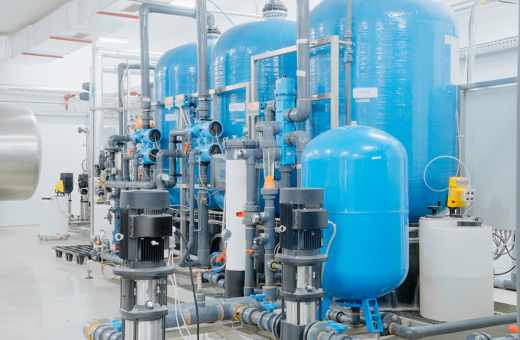
whole-home water filtration treats water at or near the point where it enters the house, depending on the system design. This can provide treated water to multiple fixtures rather than concentrating filtration in one location.
However, whole-home treatment isn’t automatically the better choice. It costs more, requires appropriate sizing and may need more maintenance. The water-quality problem should justify the approach.
Drinking Water Deserves Its Own Consideration
The water you drink deserves attention because taste can influence how much water you actually consume.
If tap water has an unpleasant chlorine taste, metallic flavor or unusual odor, even a technically acceptable supply may become something people avoid.
Activated carbon filtration can help with certain taste and odor compounds. Other systems are designed for dissolved substances that carbon isn’t intended to reduce.
Reverse osmosis is one example. It can reduce many dissolved substances and is often installed as a point-of-use system in kitchens.
The best choice depends on the water chemistry, not simply on how advanced the technology sounds.
When Reverse Osmosis Makes Sense
Reverse osmosis is more involved than a basic carbon filter.
The process uses a semipermeable membrane to separate water from many dissolved substances. Because the technology relies on pressure, incoming water conditions matter. Pretreatment may also be necessary to protect the membrane.
For homeowners considering reverse osmosis & tankless ro, tankless RO designs can be appealing where cabinet space is limited. They can provide treated drinking water without the traditional pressurized storage tank taking up as much room.
Still, homeowners should ask about wastewater, filter replacement, membrane life and maintenance before installation.
RO can be an excellent solution, but “more filtration” isn’t always the same thing as “better for every home.”
Sediment Can Be an Invisible Nuisance
Some homes experience sediment problems, particularly those using private wells.
Fine sand, silt or other particles can collect in faucet aerators, clog filters and affect appliances. Sometimes the water appears cloudy. Other times, you don’t notice anything until a filter is opened and the amount of collected material becomes obvious.
A sediment filter can capture suspended particles before they move through the home’s plumbing.
Filter selection matters, though. A very fine filter may provide excellent particle removal but clog quickly if the incoming water contains a lot of sediment. A coarser filter may last longer but allow smaller particles through.
The right balance depends on the water.
Taste and Odor Can Have Several Causes
An unusual smell isn’t automatically proof of contamination.
Chlorine can affect the taste and smell of municipal water. Sulfur compounds can create a rotten-egg odor. Iron may produce a metallic taste or orange staining.
Sometimes the source isn’t the water supply at all. A drain, water heater or plumbing component can create an odor that seems to come from the faucet.
That’s why diagnosing the cause first is worthwhile.
A filter should be selected to address a known issue, rather than purchased simply because the packaging promises “cleaner water.”
Don’t Forget Water Pressure
Water treatment equipment becomes part of the home’s plumbing system, so pressure and flow matter.
Every filter creates some resistance. If a system is undersized or poorly configured, you may notice reduced flow when multiple fixtures operate.
Think about your busiest moments. Several people showering before work? Dishwasher running while the washing machine fills? Someone watering the garden?
The treatment system needs to handle those real-life situations.
A professional installer should consider peak flow, incoming pressure, pipe size and available installation space.
Maintenance Is the Part People Forget
Even an excellent water system won’t stay excellent without maintenance.
Filters need replacement. RO membranes eventually require service. Softeners need salt and periodic checks. Some systems need cleaning or sanitization.
Before buying anything, ask how often maintenance is required and what replacement components cost.
It’s also worth asking whether filters are readily available. A system isn’t particularly convenient if its most important replacement part takes weeks to find.
Set reminders or keep a simple maintenance log. It’s not exciting, but it works.
Don’t Buy Equipment Based Only on Fear
Water treatment companies sometimes market around worst-case scenarios. It’s understandable—fear gets attention.
But good decisions don’t need panic.
Ask for water testing where appropriate. Find out what a proposed system is designed to reduce. Look for credible performance information or certification when relevant, and understand the system’s limitations.
No single filter solves every water-quality problem.
If someone claims otherwise, that’s a good reason to ask more questions.
The Best System Is the One That Fits Your Home
A family living in a hard-water area may benefit from softening. Another household may care mainly about drinking-water taste. A private well owner may have entirely different priorities.
There isn’t a universal setup, and there doesn’t need to be.
The smartest approach is to match treatment to the actual water and the way your household uses it.
Start with testing. Identify the problem. Consider whether treatment is needed at one faucet or throughout the home. Think about installation, flow rate and maintenance. Then choose technology based on evidence rather than hype.
When you get those fundamentals right, water treatment becomes much less complicated.
You don’t need a system that dominates the basement or fills every kitchen cabinet. You need one that quietly handles the problem it’s designed to solve.
And when that happens, the improvements tend to be pleasantly ordinary: cleaner fixtures, better-tasting drinking water, fewer mineral deposits and appliances that have a little less work to do.
Sometimes the best home upgrades are the ones you barely notice—because they simply make everyday life work better.