There’s a funny moment that happens when you start researching water filters. You search for one simple thing, and suddenly you’re reading about membranes, micron ratings, carbon media, certification standards and installation fittings.
It can feel like a lot.
Most homeowners aren’t looking to become water-treatment experts. They simply want water that tastes good, looks clear, and works well for everyday cooking, drinking, bathing and cleaning. The challenge is figuring out which equipment can actually deliver that result without buying more technology than the household needs.
A good place to start is by ignoring the flashy promises for a moment. Look at how the system is built, what each component does, and whether the equipment is appropriate for your particular water.
Know What You’re Trying to Improve
Before choosing a filtration system, identify the reason you’re considering one.
Maybe the water has a noticeable chlorine taste. Perhaps there is sediment in the supply. Hardness could be leaving mineral deposits around faucets and shower fixtures. Or you may simply want additional treatment for water used for drinking and cooking.
These are different problems.
A filter designed for sediment won’t necessarily address hardness. A carbon filter may help with certain tastes and odors but isn’t designed to remove every dissolved substance.
Water testing can help establish what’s actually present. From there, it becomes much easier to select a technology based on evidence instead of guesswork.
Appearance Isn’t a Complete Quality Check
Clear water looks reassuring, but water quality isn’t determined by appearance alone.
Some dissolved substances can’t be seen. Likewise, particles that are visible in a glass don’t necessarily tell you what they are or which treatment method will work best.
That’s why certification and performance information can be useful when comparing products.
If a system is advertised as nsf certified white, for example, don’t focus only on the wording or appearance of the equipment. Look into what the relevant certification covers and whether it applies to the specific performance claim you’re interested in.
Certification is most useful when you understand what it actually verifies.
Multiple Filter Stages Can Have Different Jobs
A filtration system isn’t necessarily one filter doing one enormous job.
Many systems use multiple filter stages, with each stage handling a particular part of the treatment process.
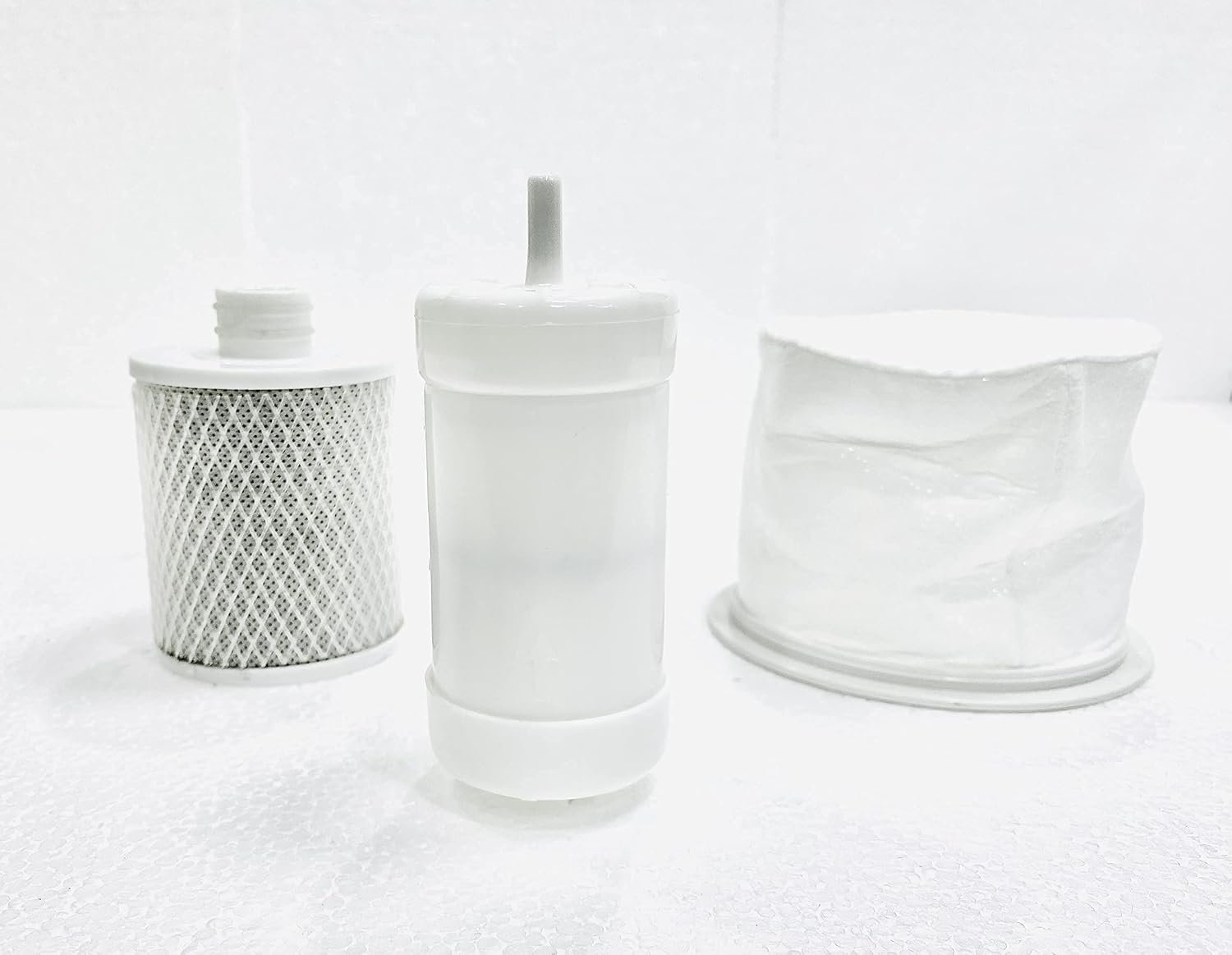
A sediment stage might capture larger particles. Carbon filtration may address certain chlorine-related tastes and odors. Additional stages can provide more specialized treatment depending on the system design.
This layered approach can be useful because each component has a defined purpose.
It also means maintenance matters. When one filter becomes exhausted or clogged, it can affect the performance of the system as a whole.
Don’t Choose Based Only on Micron Rating
Micron ratings can be useful, but they’re not the whole story.
A smaller micron rating generally indicates that a filter can capture smaller particles under the appropriate conditions. But finer filtration can also increase resistance to flow and cause a filter to load more quickly when the incoming water contains significant sediment.
The right rating depends on the application.
For example, a household with visible sediment may benefit from appropriate pre-filtration before finer treatment. Another home with mainly taste and odor concerns may have very different requirements.
The best filter isn’t necessarily the finest one.
It’s the one that fits the job.
Installation Should Be Considered Before Purchase
A system may look perfect online until you open the cabinet underneath the sink.
Space can be surprisingly limited. Pipes, garbage disposals and other equipment already compete for room.
Before purchasing, check the dimensions and think about how you’ll access the filters later. If the unit requires a drain connection, shutoff valve or dedicated faucet, those requirements should also be considered.
A complete installation kit can make the process more straightforward when the necessary components are included, but homeowners should still verify compatibility with their existing plumbing.
Included parts don’t automatically guarantee a simple installation.
Pressure and Flow Affect Performance
Water treatment systems need suitable flow conditions.
Too little pressure can reduce performance for certain technologies, while excessive flow through an undersized filter may reduce contact time or treatment effectiveness.
This is particularly important for systems that supply drinking water at a dedicated faucet.
If the water takes an unusually long time to fill a glass, there may be an issue with pressure, filter condition, membrane performance or system sizing.
A professional can help determine whether the home’s plumbing conditions match the equipment requirements.
Think About Maintenance From Day One
Every filtration system has consumable components.
Filters eventually become clogged or exhausted. Membranes have service lives. Some systems require periodic sanitation or inspection.
It’s easy to forget about these things because the equipment sits quietly under a counter or in a utility area.
Set reminders for filter replacement. Keep track of the installation date. Save the model number and manufacturer’s instructions.
Those small habits can save you a lot of frustration later.
Don’t Ignore Replacement Costs
A system might have an attractive purchase price and still become expensive over time.
Before buying, find out how much replacement filters cost and how often they typically need to be changed.
For multi-stage systems, remember that several cartridges may require replacement at different intervals.
A slightly more expensive system with readily available, reasonably priced replacement components may be a better long-term choice than a cheaper unit with difficult-to-find cartridges.
The initial price is only part of ownership.
Consider Water Waste Where Applicable
Some filtration technologies, particularly reverse osmosis, can produce reject water as part of the treatment process.
The amount varies significantly by system design.
If water conservation is a priority, compare efficiency specifications rather than assuming every system operates the same way.
Ask how much water is required to produce a given amount of treated water and whether the system includes features designed to improve efficiency.
It’s one of those details that may seem unimportant during installation but becomes more noticeable after months of use.
Think About Who Will Use the System
A filtration system should fit the household’s habits.
If everyone drinks several glasses of filtered water throughout the day, production capacity matters. If the system is mainly used for coffee and cooking, requirements may be different.
Families also tend to have periods of heavier demand.
A system that works well for one person may feel slow when several people are filling bottles at breakfast.
Consider actual usage rather than relying solely on the manufacturer’s maximum capacity.
Installation Quality Still Matters
Good equipment can’t completely compensate for poor installation.
Connections should be secure. Flow direction should be correct. Drain lines and fittings should be installed according to the equipment requirements.
The system should also be positioned so maintenance can be performed without unnecessary hassle.
If you’re hiring a professional, ask what the installation includes and whether the system will be checked for leaks and proper operation before the job is finished.
It sounds basic, but basic things matter.
Don’t Let Marketing Make the Decision
Water filtration companies have plenty of impressive words available to them.
“Advanced.” “Premium.” “Pure.” “Ultimate.”
None of those words tells you whether a particular filter is right for your water.
Look for measurable performance information. Check certifications where relevant. Understand what each stage does and what it doesn’t do.
And if you’re unsure, ask questions.
A trustworthy recommendation should be understandable even if you’re not familiar with water-treatment terminology.
The Best System Is the One You Can Live With
Choosing filtration equipment doesn’t have to become a research marathon.
Start with your water source and the problem you’re trying to solve. Test the water when appropriate. Compare treatment technologies. Look at capacity, installation requirements, maintenance and replacement costs.
Then choose something practical.
A good filtration system should quietly become part of your routine. You replace a cartridge when necessary, keep an eye on performance and otherwise get on with life.
That’s really the point.
The goal isn’t to own the most complicated equipment or the longest list of features. It’s to have a reliable source of treated water that suits your household and does what it promises.
Once you’ve made that choice, the technology can return to where it belongs — mostly out of sight, doing its job while you get on with yours.