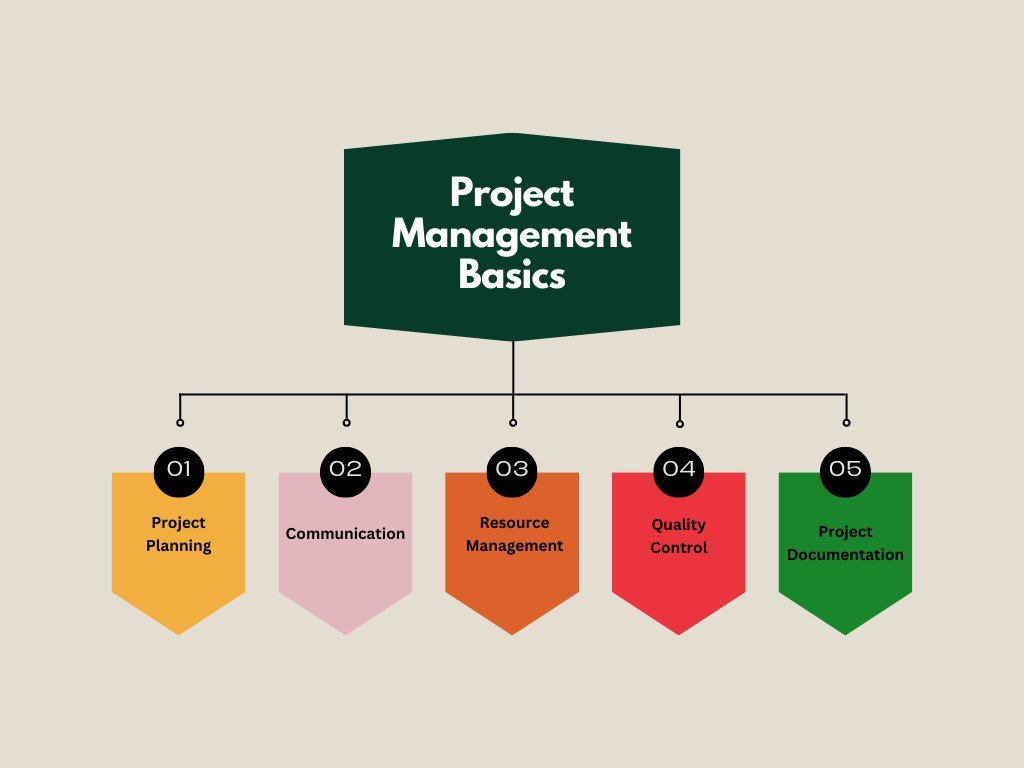
Somewhere along the way, most people end up managing a project without ever being formally trained to do it — a product launch, an office renovation, a marketing campaign. Learning the project management basics early saves you from the chaos of figuring it out through trial and error mid-project.
I remember running my first real project — a small event for about 200 people — with nothing but a notes app and good intentions. It somehow worked out, but barely. Looking back, half the stress could’ve been avoided with a proper plan from day one.
What Project Management Actually Involves
Project management is the process of planning, organizing, and overseeing tasks and resources to achieve a specific goal within a set timeframe and budget.
It sounds formal, but at its core, it’s really just structured problem-solving with deadlines attached.
The Five Basic Phases of a Project
Most projects, regardless of size, move through roughly the same stages:
- Initiation — defining the goal and whether the project is worth doing
- Planning — mapping tasks, timelines, resources, and responsibilities
- Execution — actually doing the work
- Monitoring — tracking progress against the plan and adjusting
- Closure — wrapping up, reviewing outcomes, documenting lessons learned
Skipping planning is the most common beginner mistake — people jump straight to execution and then wonder why everything feels chaotic halfway through.
Setting Clear Project Goals
A vague goal like “improve our website” isn’t actionable. Project management basics start with defining specific, measurable outcomes — “redesign the homepage and increase conversion rate by 15% within two months,” for example.
Without this clarity, it’s nearly impossible to know whether the project actually succeeded.
Breaking Down Work Into Manageable Tasks
Large projects feel overwhelming because they’re viewed as one giant thing instead of a series of smaller, doable steps. Break your project down into specific tasks, each with a clear owner and deadline.
- Assign each task to one person, not a vague group
- Set realistic deadlines, with some buffer built in
- Identify which tasks depend on others being finished first
Choosing a Simple Project Management Method
You don’t need complicated frameworks as a beginner. Two approaches work well for most small projects:
- Kanban boards — visual columns like “To Do,” “In Progress,” “Done,” great for ongoing work
- Gantt charts — timeline-based view, useful for projects with clear sequential steps and deadlines
Tools like Trello, Asana, or even a well-organized spreadsheet handle either approach fine for beginners.
Managing Risks Before They Become Problems
Every project has things that could go wrong — a vendor delay, a team member falling sick, a budget overrun. Spend a little time upfront thinking through what could derail things, and have a rough backup plan.
Communication Is Half the Job
A huge percentage of project failures come down to poor communication, not poor planning. Regular check-ins, clear updates, and making sure everyone knows their responsibilities prevents most avoidable problems.
Has a project ever gone sideways simply because two people assumed someone else was handling something? That’s almost always a communication gap, not a skill gap.
Reviewing After the Project Ends
Most beginners skip this step entirely, but it’s genuinely valuable. A short review — what went well, what didn’t, what you’d do differently — makes your next project noticeably smoother.
FAQ
Do I need certification to manage projects, or can I learn on the job? You can absolutely learn on the job for most small to mid-sized projects — certifications like PMP become more relevant for larger, complex, or corporate project management roles.
What’s the easiest project management tool for beginners? Trello is often recommended for beginners because of its simple, visual Kanban-style layout that requires very little setup time.
How detailed should a project plan be for a small project? Detailed enough to clarify who’s doing what and by when — over-planning small projects can actually waste more time than it saves.
What’s the biggest reason projects fail? Poor communication and unclear ownership of tasks are consistently cited as leading causes of project failure, more than lack of resources or skill.
Can project management skills help outside of formal work projects? Definitely — the same basics apply to planning personal events, home renovations, or any goal involving multiple steps and people.
[link to related guide about time management tips for busy entrepreneurs here]
Conclusion
These project management basics — clear goals, broken-down tasks, simple tracking tools, and consistent communication — apply whether you’re running a small team project or a much bigger initiative. Start your next project by spending just thirty minutes mapping out tasks and owners before diving into execution. That one habit alone prevents most of the chaos beginners run into.