A commercial roof has a fairly thankless job. It sits above offices, warehouses, stores, workshops, and other busy spaces, taking whatever the weather throws at it while everyone underneath carries on with business.
When the roof works, nobody notices.
When it doesn’t, everyone does.
Choosing a roofing system for a commercial building, then, isn’t really about picking the material that looks best in a sample. It’s about understanding how the building is used, what the local weather is like, how much maintenance the owner can realistically manage, and how the roof is expected to perform over the years.
There isn’t one perfect roofing system for every property. The right choice is usually the one that fits the building rather than the one with the longest sales pitch.
Start With the Building Itself
Before comparing roofing materials, consider the building.
Is it a large warehouse with a broad, low-slope roof? An office building with rooftop mechanical equipment? A retail property where appearance matters more? Does the building have frequent foot traffic on the roof for maintenance?
These details can influence the type of system that makes sense.
Roof slope, drainage, existing insulation, rooftop equipment, structural capacity, and access requirements all deserve attention. A professional assessment can help identify practical limitations before a material is selected.
It’s tempting to begin with price, but starting with the building usually leads to a better decision.
Metal Roofing Has a Different Personality
Metal roofing is often considered when owners want a durable system with a long service life and relatively low maintenance requirements.
Metal systems can be made from materials such as steel, aluminum, or other alloys, depending on the application. They can also be finished in a range of colors and profiles, making them suitable for both practical and aesthetic requirements.
One thing to remember is that installation quality matters enormously.
Expansion and contraction, fasteners, seams, penetrations, flashing, and drainage all need to be handled properly. A metal roof that is poorly installed can develop problems despite the inherent strength of the material.
The surrounding environment matters too. Certain metals and coatings may be better suited to particular weather or exposure conditions.
Don’t Judge a Roof by Its Surface Alone
A commercial roofing system is more than its outer layer.
Insulation can influence energy performance and indoor comfort. The roof deck provides structural support. Vapor control, drainage, flashing, and edge details all contribute to how the complete system performs.
When comparing proposals, ask contractors to explain the full assembly.
Two roofs may use similar surface materials while having very different insulation, underlayment, attachment methods, or warranties.
That difference may not be obvious on installation day, but it can matter years later.
SPF Can Be Useful in Certain Situations
Spray polyurethane foam, commonly called SPF, is another roofing approach used on some commercial buildings.
The material is sprayed onto the roof surface and expands, creating a continuous layer. Depending on the design, it can help provide insulation and create a seamless protective surface around certain roof features.
One potential advantage is the ability to cover irregular areas and reduce the number of seams.
However, SPF requires skilled installation and appropriate maintenance. The protective coating over the foam needs to remain in good condition because prolonged exposure can degrade the underlying material.
It isn’t a system that should be chosen casually. Building conditions, existing roofing, drainage, climate, and contractor expertise all deserve consideration.
EPDM Has Been Around for Good Reason
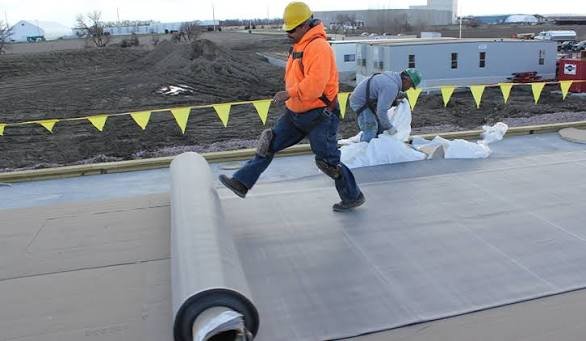
EPDM, or ethylene propylene diene monomer, is a synthetic rubber roofing membrane widely used on low-slope commercial buildings.
The material is known for flexibility and resistance to weathering, making it a familiar option in commercial roofing.
A properly installed EPDM system can provide reliable protection, particularly when the installation is matched to the building and environmental conditions.
Seams, flashing, penetrations, and attachment methods are still important. Like any roofing material, EPDM isn’t maintenance-proof.
Regular inspections can identify punctures, seam concerns, or deterioration before they turn into larger problems.
Think Seriously About Drainage
Water is one of the biggest considerations for commercial roofs.
Low-slope systems don’t necessarily look steep enough to move water quickly, so drainage design becomes especially important. Internal drains, scuppers, gutters, and carefully designed slopes all play a role.
Standing water that repeatedly remains on the roof should be investigated.
It could point to blocked drains, insufficient slope, settlement, or another underlying issue.
Choosing a durable roofing material won’t compensate for poor drainage. Water management needs to be part of the design from the beginning.
Rooftop Equipment Changes the Equation
Commercial roofs often have HVAC units, vents, pipes, electrical equipment, and other systems installed above them.
Those components create penetrations and areas where maintenance workers may need regular access.
When selecting a roofing system, consider how easily technicians can reach equipment without damaging the roof.
Walk pads or designated pathways may be appropriate in areas with frequent foot traffic.
It’s a small planning detail, but repeated maintenance activity can place significant wear on roofing surfaces over time.
Climate Should Influence Your Decision
A roofing system that works well in one region may not be the ideal choice somewhere else.
Sun exposure, rainfall, wind, temperature changes, humidity, and severe storms can all influence roofing performance.
Think about the conditions the roof will face year after year rather than simply choosing based on today’s weather.
Ask the contractor how the proposed system handles local environmental stresses and what maintenance will be required.
There is no substitute for matching the material to the actual conditions of the property.
Installation Quality Is Critical
Roofing materials don’t install themselves.
Even a high-quality system can fail prematurely when seams are poorly handled, flashing is neglected, drainage isn’t considered, or the substrate isn’t prepared correctly.
Before hiring a contractor, ask about experience with the specific roofing system you’re considering.
Find out whether the crew is trained or certified by the manufacturer where applicable.
References and examples of comparable commercial projects can also provide useful insight.
The goal isn’t to find someone who simply says they can install everything. It’s to find someone who has successfully installed the system you’re paying for.
Maintenance Still Matters
No commercial roofing system should be treated as completely maintenance-free.
Schedule periodic inspections. Keep drains and drainage paths clear. Check flashing and seams. Look for punctures, unusual ponding, or damage caused by other trades.
After major storms, another inspection may be appropriate.
Early maintenance can be particularly valuable because small roofing problems are generally easier to address than widespread moisture damage.
A maintenance budget isn’t just another expense. It’s part of protecting the larger investment in the building.
Think About the Entire Life Cycle
A roofing system’s initial price tells only part of the story.
Consider installation costs, expected service life, maintenance requirements, repairability, energy performance, warranty coverage, and eventual replacement.
A system with a higher upfront cost may offer better value if it performs reliably with manageable maintenance.
Likewise, an inexpensive system isn’t necessarily a poor choice if it’s well suited to the building and properly installed.
The right question isn’t simply, “How much does it cost?”
It’s, “What will this roof cost and deliver over its useful life?”
Get Professional Advice Before Deciding
Commercial roofing can become technically complicated very quickly.
Rather than choosing a material based on a quick online comparison, have qualified roofing professionals evaluate the building and explain realistic options.
Ask for more than one proposal when appropriate. Compare the systems, not just the prices.
Pay attention to what’s included in each quote, including insulation, flashing, drainage work, removal, disposal, warranties, and maintenance recommendations.
That extra effort can prevent an expensive mismatch.
The Best Roof Is the One That Fits the Building
Metal, SPF, and EPDM each have applications where they can make good sense. None is automatically the winner for every commercial property.
The building’s design, climate, budget, maintenance expectations, and long-term plans should guide the decision.
A good commercial roof isn’t necessarily the most sophisticated one. It’s the system that’s properly designed, correctly installed, regularly maintained, and suited to the demands placed on it.
Once you’ve made that choice, the roof can get back to doing its quiet, unglamorous job — protecting the business underneath while everyone gets on with theirs.