Rain has a funny way of exposing weaknesses in a property. A driveway that looks perfectly level on a sunny afternoon can become a shallow pond after a heavy storm. Water can collect beside a building, spill across a parking lot, wash away soil, or find its way into places where it really shouldn’t be.
Usually, the problem isn’t the rain itself. It’s what happens to the rain after it reaches the ground.
Good stormwater planning is about giving runoff a safe, controlled path. It doesn’t need to be complicated, but it does need to account for the property, the surrounding landscape, and the amount of water that may arrive in a short period.
That’s where stormwater management systems become useful. They can help collect, direct, slow, store, or otherwise manage runoff so that rainfall doesn’t create avoidable problems.
Why Stormwater Deserves Attention
Natural ground can absorb a considerable amount of rainfall. Modern properties are different.
Roofs, concrete sidewalks, asphalt parking lots, driveways, and other hard surfaces prevent water from soaking into the soil as easily. Instead, rainfall runs across these surfaces and gathers quickly.
The more developed a property becomes, the more important runoff planning can be.
A small residential yard and a large commercial parking area have very different drainage demands. Both need to manage rain, but the scale and design requirements aren’t the same.
Ignoring that difference can lead to standing water, erosion, damaged landscaping, and stress on nearby infrastructure.
Understanding Where Water Wants to Go
Rainwater naturally follows gravity.
It moves downhill, collects in low areas, and searches for the easiest available route. Construction can change those natural patterns, sometimes unintentionally.
A newly paved driveway may redirect runoff toward a neighboring property. A retaining wall can block a previous drainage path. Landscaping can create small depressions where water begins to collect.
Understanding the existing terrain is therefore an important part of planning.
Before adding drains or underground pipes, it’s worth asking a simple question: where does the water naturally want to go?
The answer often reveals more than a generic drainage design ever could.
Controlling Water Flow
A successful drainage design isn’t necessarily about getting water away as quickly as possible.
In some situations, slowing runoff down is just as important.
Water flow can be controlled using grading, swales, channels, catch basins, underground piping, detention areas, retention features, or other site-specific approaches.
The appropriate solution depends on the property and local requirements.
Moving water too quickly from one location can simply shift the problem somewhere else. Good stormwater planning considers what happens downstream, not just what happens at the first low spot.
Drainage Starts With Good Grading
The shape of the ground has a major influence on stormwater.
Proper grading directs runoff away from structures and toward designated collection or discharge areas. Poor grading can do the opposite, allowing water to sit against foundations, pool near entrances, or travel across areas where it can cause damage.
Drainage problems aren’t always caused by missing pipes.
Sometimes the underlying issue is simply that the ground slopes in an unfavorable direction.
That’s why grading should be considered alongside underground drainage infrastructure rather than treated as a completely separate issue.
Catch Basins Have a Practical Purpose
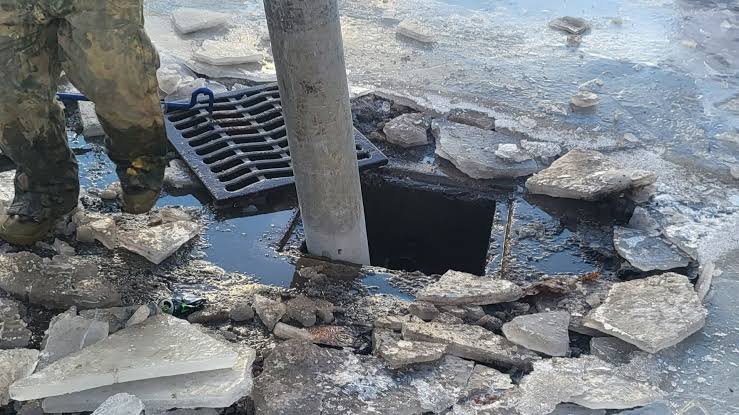
Catch basins are common in stormwater systems because they provide a collection point for runoff.
They can also capture leaves, sediment, trash, and other debris before those materials enter underground pipes.
That sounds like a small benefit until a storm drain becomes blocked.
Regular inspection and cleaning can help maintain capacity and reduce the likelihood of backups. Properties surrounded by trees may need more frequent attention because leaves and organic debris can accumulate quickly.
A drainage system is only useful if water can actually enter it and move through it.
Underground Pipes Can Make a Big Difference
In some areas, surface channels aren’t practical or desirable.
Underground stormwater pipes can move runoff beneath parking lots, roads, sidewalks, and other developed spaces.
But underground infrastructure comes with its own considerations.
Pipes need suitable sizing, connections, slope, access, and protection. They may also need to accommodate sediment and debris without becoming difficult to maintain.
Installation should account for what happens years later. A pipe that works perfectly on the first day still needs to remain accessible enough for inspection and maintenance.
Soil Conditions Matter
The ground beneath a property affects how stormwater behaves.
Some soils absorb water relatively quickly, while others drain much more slowly. Clay-heavy soils can create very different runoff conditions compared with sandy or gravelly ground.
Soil compaction also matters. Construction equipment can compress soil and reduce its ability to absorb rainfall.
Understanding local soil conditions can help determine whether infiltration-based solutions are practical or whether additional collection and conveyance infrastructure is needed.
There isn’t a universal stormwater solution. The ground itself is part of the equation.
Landscaping Can Help or Hurt
Landscaping isn’t just decorative when it comes to stormwater.
Plants, soil beds, rain gardens, berms, and carefully shaped planting areas can help slow and manage runoff. Vegetation can also reduce erosion and improve how water interacts with the ground.
But landscaping can create problems when installed without considering existing drainage routes.
A new garden bed placed directly in a runoff path might trap water where it isn’t wanted. A tree planted too close to underground drainage infrastructure could eventually create maintenance concerns.
The best landscape designs work with the property’s water patterns rather than fighting them.
Commercial Properties Face Bigger Challenges
Large commercial properties can generate substantial runoff because of their extensive roofs and paved surfaces.
Parking lots, loading areas, access roads, and large buildings all contribute to runoff volume.
That means stormwater planning may need to consider collection points, conveyance capacity, detention or retention features, maintenance access, and discharge locations.
Heavy rainfall can expose weaknesses very quickly.
A drainage inlet that handles ordinary rain comfortably may struggle during a major storm if the system wasn’t designed for the site’s expected conditions.
Maintenance Is Part of the Design
Even a well-designed stormwater system needs attention.
Leaves collect. Sediment settles. Grates become blocked. Vegetation grows. Pipes can develop problems.
Routine inspections help identify these issues before they become serious.
Property owners should pay attention to areas that repeatedly flood or remain wet after rainfall. Recurring standing water is often a clue that something isn’t working as intended.
Maintenance records can also help identify patterns. If the same catch basin requires cleaning every few months, there may be a larger issue worth investigating.
Planning for Heavy Rain
Weather isn’t always predictable.
A property may go through long dry periods followed by intense rainfall. Stormwater infrastructure should therefore be considered in terms of both ordinary conditions and more demanding events where applicable.
Local design requirements and site-specific engineering should guide decisions about capacity and discharge.
Homeowners shouldn’t assume that a solution used successfully on one property will automatically work somewhere else.
Different slopes, soils, surfaces, and surrounding infrastructure can change the entire picture.
Think Beyond the Property Line
Water doesn’t care where a property boundary ends.
Runoff leaving one site can affect roads, neighboring properties, public drainage infrastructure, or natural waterways.
That’s why responsible stormwater planning considers the larger environment.
The goal isn’t simply to make one property dry. It’s to manage runoff in a way that reduces avoidable impacts beyond the site.
A Dry Property Starts With Thoughtful Planning
Stormwater management isn’t particularly glamorous. Nobody throws a party because a catch basin is working properly.
Still, these systems play an important role in protecting buildings, pavement, landscaping, and surrounding areas.
The best approach begins with understanding the site: its slopes, soil, surfaces, existing infrastructure, and natural water paths. From there, the right combination of grading, collection, conveyance, storage, and maintenance can be developed.
Rain will keep coming. That’s not something a property owner can control.
What can be controlled is how prepared the property is when it arrives.
When water has somewhere sensible to go, heavy rain becomes less of a crisis and more of what it should be—a normal part of the weather, passing through without leaving a mess behind.