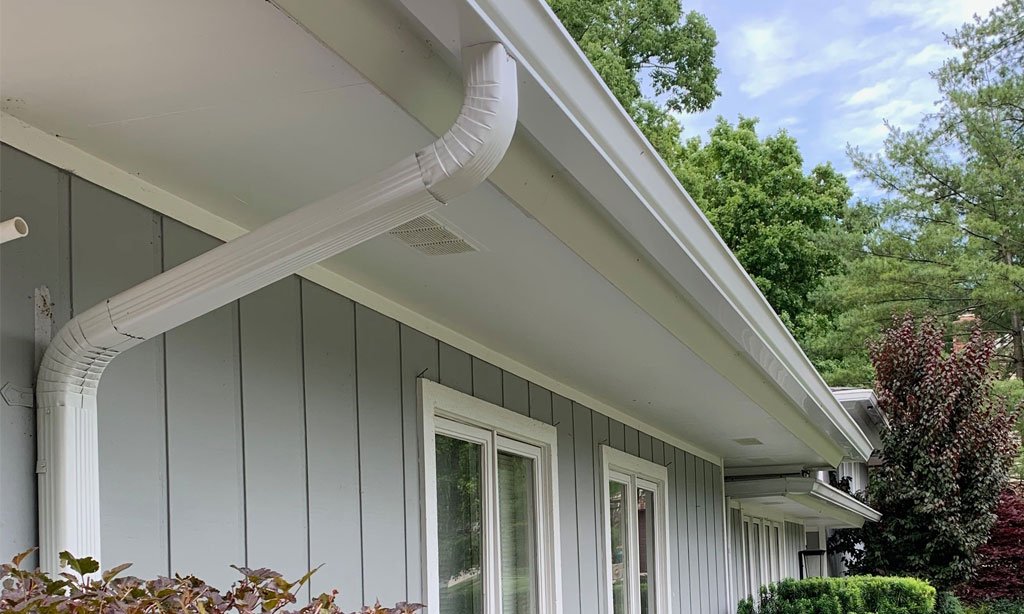
Gutters aren’t usually something homeowners get excited about. They’re up near the roofline, mostly out of sight, doing their job without asking for much attention. But when a storm rolls in and water starts spilling over the edge, suddenly they’re impossible to ignore.
A good gutter system has one basic purpose: move rainwater away from the house in a controlled way. That sounds simple, yet several things have to work together for it to happen properly. The gutters need to stay clear, the water needs a reliable route downward, and the final discharge point needs to be far enough away from vulnerable areas.
That’s where maintenance, gutter guards, properly positioned downspouts, and quality installation all come into the picture.
Why Gutters Need More Than Occasional Cleaning
Leaves are the obvious enemy, but they’re not the only problem.
Pine needles, small branches, roof granules, dirt, moss, and other debris can gradually collect inside gutters. Once enough material builds up, water begins moving more slowly. During a heavy storm, the system may not be able to handle the incoming flow.
Overflowing water can run down exterior walls or collect beside the foundation.
Cleaning gutters regularly is one solution. For homes surrounded by mature trees, however, it can become a frequent and inconvenient chore. That’s why many homeowners consider installing guards that reduce the amount of debris entering the system.
Are Gutter Guards Really Worth It?
The answer depends on the property.
Gutter guards can reduce the amount of leaves and larger debris entering gutters, which may make maintenance easier. They’re particularly useful in heavily wooded areas where gutters can fill surprisingly quickly.
But no guard eliminates maintenance completely.
Fine debris can still accumulate, and some guard designs may require periodic cleaning. The quality of the installation matters too. A guard installed over gutters that already sag, leak, or have poor drainage isn’t going to solve those underlying problems.
Think of guards as a maintenance aid, not a magical solution.
Downspouts Are the Part People Forget
Homeowners tend to focus on the horizontal gutter and overlook what happens next.
That’s where downspouts become important.
Their job is to carry collected water from the roofline toward the ground. If they’re too few, too small, clogged, or badly positioned, water may back up into the gutter.
Even when the downspouts work properly, their location matters.
If water exits directly beside the foundation, you’ve simply moved the problem from the roof edge to the ground. Extensions, splash blocks, or other drainage solutions may help direct runoff farther away.
Watch the ground during a heavy rain. It can tell you more than a dry-weather inspection sometimes can.
Look for Signs of Poor Drainage
You don’t need to be a drainage expert to spot certain warning signs.
Look for:
- Soil erosion below downspouts
- Persistent puddles
- Muddy areas near the foundation
- Water stains on exterior walls
- Gutters overflowing during moderate rainfall
- Sagging gutter sections
- Downspouts that discharge directly against the house
None of these signs automatically identifies the exact cause.
Grading, soil conditions, roof design, and landscaping can all influence drainage. Still, recurring water problems deserve attention rather than being written off as “just heavy rain.”
Installation Sets the Foundation
A gutter system can have quality materials and still perform poorly if it’s installed incorrectly.
The installer needs to consider roof dimensions, pitch, drainage paths, gutter slope, support spacing, corners, outlets, and downspout placement.
This isn’t about making everything look perfectly straight from the sidewalk. The system needs enough slope for water to move toward the outlets while remaining securely attached to the building.
If the pitch is wrong, water can sit inside the gutter.
Standing water adds unnecessary weight and can contribute to sagging or deterioration over time.
When to Call Gutter Contractors
Some jobs are reasonable DIY projects. Cleaning accessible gutters, for example, may be manageable if you have the right equipment and can work safely.
More complicated work is another matter.
If sections are pulling away from the fascia, downspouts need rerouting, or the entire drainage layout needs redesigning, professional help can save time and prevent mistakes.
Experienced gutter contractors can assess the existing system and explain what actually needs to change.
A good contractor shouldn’t automatically recommend replacing everything. If a small repair will solve the issue, that’s worth knowing.
Material Choices Matter, But They’re Not Everything
Gutters are commonly made from aluminum, steel, copper, and vinyl.
Aluminum remains popular because it’s lightweight and available in many configurations. Steel offers strength but may require more attention to corrosion. Copper provides a distinctive appearance and can develop an attractive patina, although it tends to cost considerably more.
Vinyl can work well in certain applications but may respond differently to temperature changes.
Material is only one part of the decision.
A high-quality gutter made from an excellent material won’t perform well if it’s incorrectly sized or poorly installed.
Don’t Forget the Fascia
The fascia is the surface behind the gutter, and it provides an important attachment point.
If gutters have been leaking or pulling away for a long time, the fascia may have suffered moisture damage.
Watch for soft spots, staining, peeling paint, or visible deterioration.
This is especially important before installing a new system. New gutters should be attached to a sound surface.
Otherwise, the installation may look great initially but struggle to remain secure.
Gutters and Roofing Work Together
Rainwater starts its journey on the roof.
Roofing materials direct water toward the edges, where the gutter system takes over. Flashing protects vulnerable joints and transitions. Downspouts then carry the collected water away.
Because these components are connected, roofing problems can sometimes appear as gutter problems.
For instance, excessive roof runoff in one area may overwhelm a section of gutter. Damaged flashing can send water where it shouldn’t go.
If you’re planning roof work, it’s worth checking the drainage system at the same time.
Gutter Guards Need the Right Design
Not all guards are identical.
Some use mesh. Others rely on screens, covers, or different filtering designs.
The best option depends on the type of debris around your property.
A home surrounded by large leaves has different needs from one beneath pine trees that shed small needles year-round.
Before choosing a guard, ask how easily it can be cleaned and inspected.
You don’t want to install something that makes the gutter system nearly impossible to access later.
Don’t Ignore Winter Conditions
In colder climates, water trapped inside gutters can freeze.
Ice adds weight and can contribute to gutter deformation or separation. Repeated freeze-thaw cycles may also create additional stress on joints and attachments.
Keeping gutters clear and ensuring water drains properly before winter can reduce some of these risks.
Where ice-related problems are common, homeowners may also need to consider broader roof and drainage conditions.
Storms Are a Useful Test
Heavy rain is the best natural test of a drainage system.
During a storm, safely observe what’s happening from the ground.
Is water flowing smoothly toward the downspouts? Are gutters overflowing in certain sections? Is water landing too close to the foundation?
You don’t need to climb a ladder during severe weather.
Make notes and inspect the system later when conditions are safe.
Patterns matter. If the same area repeatedly overflows, that’s a clue worth investigating.
Maintenance Doesn’t Have to Be Complicated
A simple routine can prevent many problems.
Inspect gutters periodically. Clear debris when necessary. Check downspouts for blockages. Look for loose or sagging sections. Examine the fascia for signs of moisture. After major storms, look for obvious damage.
If you have gutter guards, inspect them too.
A system that looks fine from the ground may still have hidden buildup.
The goal isn’t to spend your weekends thinking about gutters. It’s to spend a few minutes checking them so they don’t become an expensive surprise later.
Know When Replacement Makes Sense
Sometimes repairs are enough.
Other times, a system has simply reached the end of its useful life.
If gutters are extensively rusted, repeatedly leaking, badly damaged, or consistently undersized for the roof, replacement may be more practical than endless patching.
When replacing the system, reconsider the entire layout rather than automatically copying the old one.
Could another downspout improve drainage? Would a longer run need additional outlets? Is water being discharged in the right location?
A replacement project is an opportunity to fix weaknesses that have been around for years.
The Best Gutter System Is the One You Rarely Notice
A properly functioning gutter system is almost invisible.
Rain falls. Water enters the gutters. It moves through the downspouts and away from the house. Nothing dramatic happens.
That’s the goal.
Good drainage isn’t about having the fanciest equipment. It’s about thoughtful design, reliable installation, reasonable maintenance, and paying attention when something changes.
Gutter guards can reduce debris. Properly positioned downspouts can control where water goes. Professional installation can make sure the system is correctly sized and supported.
Put those pieces together, and a relatively simple part of the house can quietly protect the much more expensive parts underneath it.
And honestly, when it comes to home maintenance, boring is often a very good thing.