Buying a water filtration system sounds simple until you start comparing what’s actually available. One product promises cleaner-tasting water. Another focuses on sediment. A third talks about advanced membranes, multiple stages, or impressive-sounding percentages.
Then you look at your own water and realize the real question isn’t, “Which filter is best?”
It’s, “Which filter is right for my water?”
That distinction matters. Water quality varies from one property to another, and a treatment system that works beautifully for one household may be unnecessary—or completely unsuitable—for another. Choosing well starts with understanding the problem you’re trying to solve.
Start With What Is Actually in the Water
Before looking at equipment, test the water when appropriate.
A water test can identify hardness, pH, iron, manganese, sediment, certain metals, microorganisms, and other characteristics depending on the testing panel. Private well owners may need more regular testing because groundwater conditions can change.
Municipal water is treated before reaching homes, but household plumbing can still influence water quality. Older pipes, fixtures, and water heaters can sometimes contribute to taste, odor, or other concerns.
Testing gives you a baseline. Without it, you’re largely shopping by symptoms.
And symptoms can be misleading.
A metallic taste might come from plumbing. Cloudy water could be sediment or air. White deposits might indicate hardness rather than a filtration problem.
Understand What a Filter Can and Cannot Do
One of the biggest mistakes homeowners make is assuming every filtration system removes everything.
It doesn’t.
Different technologies have different filtration capabilities. A sediment filter is designed to capture physical particles. Activated carbon can reduce certain chemicals and improve taste and odor. Reverse osmosis can reduce many dissolved substances. Specialized media may target iron, manganese, or other specific concerns.
There isn’t one universal filter that handles every water-quality issue equally well.
This is why treatment should be selected after identifying the problem. If sediment is the concern, you need effective particle filtration. If dissolved contaminants are the issue, a completely different technology may be required.
The label “water filter” isn’t enough information.
Size Matters More Than You Might Expect
A filtration system needs to keep up with household water demand.
Imagine a normal weekday morning. Someone is showering, another person is washing dishes, the washing machine is running, and a toilet flushes. Water demand can climb quickly.
If the system is too small or restrictive, pressure and flow may suffer.
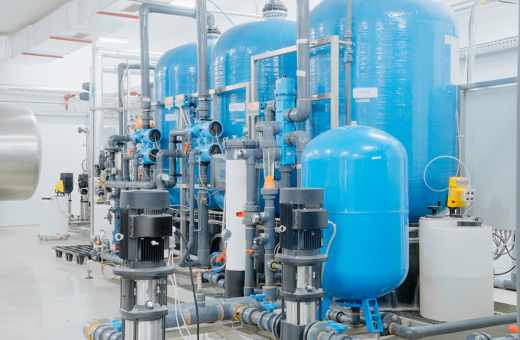
When comparing system sizes, look beyond the physical dimensions of the equipment. Pay attention to rated flow, capacity, pressure requirements, filter life, and the conditions under which the manufacturer’s performance claims were measured.
A compact system isn’t necessarily inadequate, and a huge system isn’t automatically better.
The goal is appropriate capacity.
Whole-Home or Point-of-Use?
This is another decision that deserves some thought.
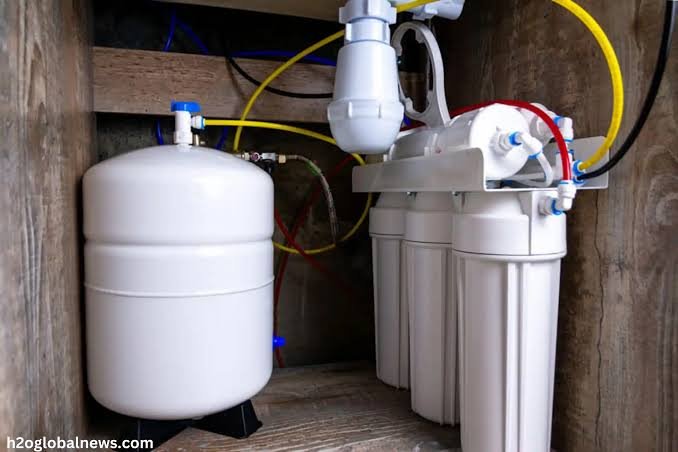
A point-of-use filter treats water at one location, such as the kitchen faucet. It can be a sensible choice when the main concern is drinking and cooking water.
Whole-home filtration treats water as it enters the property. That can be more appropriate when sediment, odor, or another issue affects showers, laundry, appliances, and multiple fixtures.
Consider how you actually use water.
If your concern is simply the taste of drinking water, treating every gallon entering the house may be unnecessary. If you’re dealing with well-water sediment throughout the plumbing, however, whole-home treatment could be much more practical.
Don’t Ignore Flow Rate
Water treatment equipment needs enough flow to operate effectively.
Manufacturers generally provide recommended flow rates and operating conditions. These specifications should be compared with your home’s actual demand.
A filter that performs well at a modest flow rate might not provide the same results when several fixtures are operating simultaneously.
Pressure loss can also become noticeable as filters load with sediment. A system that starts with excellent flow may become restrictive if cartridges aren’t replaced on schedule.
This is another reason maintenance and sizing belong in the same conversation.
Features Can Be Useful—But Only If You’ll Use Them
Modern treatment equipment can come with plenty of extras. Digital displays, automatic monitoring, remote notifications, metered regeneration, leak detection, and other options may be available depending on the type of system.
Some are genuinely useful.
Others may simply add complexity.
When comparing system features, ask yourself whether they solve a real problem. An automatic alert that tells you when a filter needs replacement could be genuinely convenient. A feature you never use is just another thing that can eventually fail.
Don’t pay extra simply because a product has a longer feature list.
Consider the Cost of Ownership
The purchase price is only the beginning.
Filters need replacement. Membranes wear out. Specialized media eventually needs servicing or replacement. Some systems require electricity, drainage, or periodic professional attention.
Before choosing equipment, estimate the ongoing cost.
A lower-priced system with expensive proprietary cartridges may cost more over several years than a slightly more expensive system using readily available replacements.
Ask how frequently filters need changing and what those replacements cost. If professional service is required, understand those expenses too.
A five-year view can tell you much more than the price tag in the showroom.
Maintenance Should Be Convenient
Even the best filtration technology can’t work forever without maintenance.
Sediment filters gradually fill with trapped particles. Carbon filters eventually become exhausted. RO membranes require replacement. Specialized treatment media may have specific service schedules.
If maintenance is difficult, people tend to postpone it. That’s just human nature.
Choose equipment that can be accessed easily and whose replacement parts are reasonably available. Make sure there’s enough space around the system to remove housings, inspect valves, and perform routine service.
A system that is easy to maintain is much more likely to remain effective.
Think About Your Water Pressure
Water pressure is another practical consideration that often gets overlooked during the buying process.
Some treatment technologies require a certain pressure range to perform properly. Adding several treatment stages can also create additional resistance in the plumbing.
If your home already has low pressure, discuss that before installing a filtration system.
In some situations, a pressure evaluation or plumbing adjustment may be needed. The treatment equipment should complement the home’s water system rather than fight against it.
Don’t Let Marketing Make the Decision
Water-treatment advertising can be persuasive. Words like “advanced,” “premium,” “maximum,” and “complete” sound reassuring.
But marketing language doesn’t replace performance information.
Look for clear specifications and, where relevant, independent certification or testing. Ask what contaminants the system is designed to reduce, under what conditions, and for how long.
Be especially cautious about vague promises to remove “all contaminants.” Water chemistry is too complicated for that kind of blanket claim to be very useful.
Good equipment should be explainable in plain English.
A Good System Should Fit Your Life
The right filtration system isn’t necessarily the most powerful, expensive, or technologically advanced option.
It’s the one that matches your water quality, household demand, available space, maintenance habits, and budget.
Start with testing. Identify the actual concern. Compare treatment technologies. Check flow rates and capacity. Consider maintenance and long-term costs. Then look at optional features.
That process may sound less exciting than buying the newest system on the market, but it’s far more likely to produce a good result.
Ultimately, water treatment is about solving a practical household problem. When the equipment is properly sized, correctly installed, and maintained as recommended, it can quietly do its job for years.
And that’s probably the best sign you’ve chosen well: you stop thinking about the filter altogether and simply enjoy the water.