There’s a certain kind of household mess that feels almost personal. You scrub the shower door until it looks spotless, rinse everything carefully, and a few days later those cloudy white marks are back.
The faucet has a chalky ring. The showerhead looks tired. The coffee maker needs descaling again.
For homes experiencing scale buildup, this can become a familiar and frustrating cycle. Often, the underlying issue is hard water—the presence of dissolved minerals, particularly calcium and magnesium, that can leave deposits behind as water evaporates or gets heated.
Hard water isn’t necessarily a health emergency. In many homes, it’s more of a persistent maintenance nuisance. But over time, those deposits can affect fixtures, plumbing and water-using appliances.
Understanding what’s happening is the first step toward deciding whether treatment is worthwhile.
What Scale Actually Is
Scale is essentially mineral residue left behind by water.
When hard water moves through a faucet and eventually dries, dissolved minerals can remain on the surface. The same thing happens inside plumbing and appliances, although you can’t see those deposits developing.
Heating can make the problem especially noticeable.
Water heaters, coffee makers and dishwashers repeatedly expose water to heat, creating conditions where mineral deposits can accumulate. Over time, the material can become thicker and harder to remove.
That explains why a fixture that looked fine last year might suddenly seem coated in white crust.
It didn’t happen overnight. You just finally noticed it.
The Cleaning Problem Gets Old Quickly
One of the most frustrating aspects of hard water is how repetitive the cleaning becomes.
You clean the glass. You wipe the faucet. You scrub the showerhead.
Then you do it again.
Mineral spots can be particularly stubborn because ordinary soap and water aren’t always enough to remove them. Homeowners may find themselves reaching for vinegar, specialty cleaners or abrasive products just to keep surfaces looking presentable.
Some cleaning is always part of owning a home, obviously. But if you feel like you’re constantly fighting the same white deposits, it’s reasonable to ask whether the water is contributing to the problem.
Softer Water Can Change Everyday Chores
When hardness is the main concern, water softening may provide a broader solution than repeatedly cleaning individual fixtures.
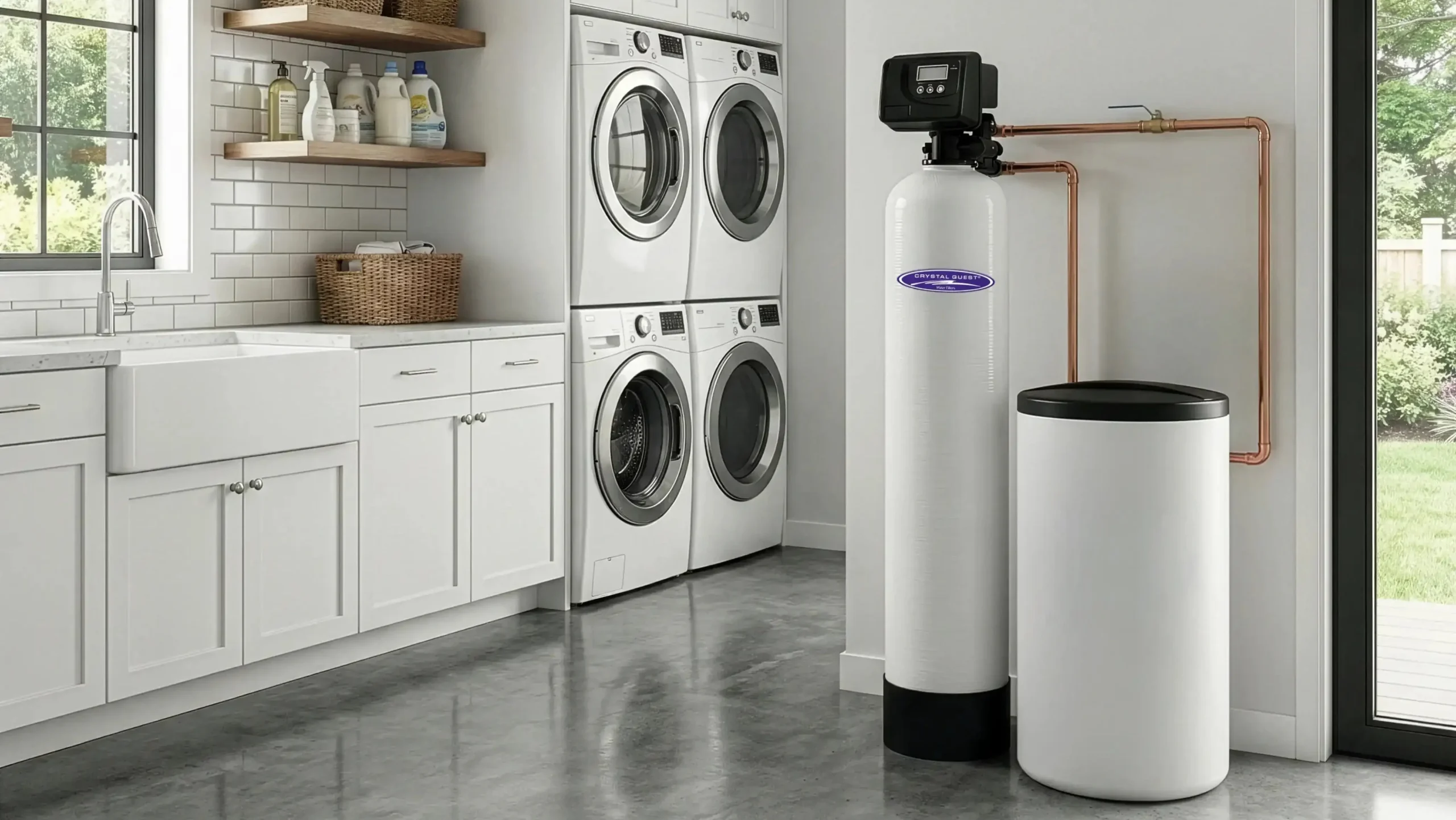
A properly sized softener can reduce calcium and magnesium in household water through an ion-exchange process. The result is softer water throughout the home, which can change how water behaves on surfaces and inside plumbing.
That doesn’t mean every home needs a softener.
If your water is only mildly hard and you don’t mind occasional cleaning, you may decide treatment isn’t worth the expense. But when deposits are persistent, appliances are affected and cleaning becomes a weekly battle, softening becomes more worth considering.
Your Shower Is Often the First Clue
The bathroom tends to reveal hard water problems quickly.
Shower glass shows spots. Faucets develop rings. Showerheads can become partially blocked as deposits accumulate around the openings.
You may also notice that soap doesn’t rinse quite as cleanly as you’d expect.
None of these signs alone proves that you have a serious water-quality problem. But together, they form a useful pattern.
If several fixtures throughout the house show similar deposits, testing the water for hardness can give you a much clearer answer than guessing.
Water Heaters Have a Tougher Time
Inside a water heater, scale is harder to see but potentially more troublesome.
Mineral deposits can accumulate on heating surfaces or settle inside the tank. Sediment and scale can contribute to unusual noises, reduced efficiency or increased maintenance needs, depending on the heater and the water conditions.
That doesn’t mean hard water automatically ruins a water heater.
Regular maintenance still matters. Flushing the tank according to the manufacturer’s recommendations can help manage sediment, while addressing significant hardness may reduce the mineral load entering the equipment.
Think of it as reducing one source of unnecessary stress on a system you depend on every day.
Appliances Can Show the Same Symptoms
Your dishwasher, washing machine and coffee maker all interact with household water.
Dishwashers may leave cloudy spots on glasses. Coffee makers may develop scale around internal heating components. Washing machines can accumulate mineral residue over time.
Again, these problems have multiple possible causes.
Detergent choice, temperature, appliance age and maintenance all matter.
Still, if several appliances show signs of mineral deposits, water hardness deserves consideration.
Treating the water doesn’t replace appliance maintenance. It simply addresses one factor that may be contributing to the problem.
Why Plumbing Deserves Attention
Most plumbing is hidden, so it’s easy to forget that mineral-rich water travels through those pipes every day.
Deposits can accumulate in fixtures, valves and other components. Over a long period, this may contribute to restricted flow or component problems in some situations.
The goal isn’t to suggest that every hard-water home is heading toward a plumbing disaster. That’s simply not true.
But if your objective is to protect plumbing and appliances, understanding water hardness can be part of sensible preventive maintenance.
Testing is inexpensive compared with guessing—and potentially much cheaper than replacing equipment unnecessarily.
Not All Water Problems Are Hard Water
This distinction matters.
A metallic taste, unpleasant odor or visible particles doesn’t automatically mean hardness is responsible.
Sediment, iron, chlorine, organic compounds and other water characteristics can create entirely different issues. A softener isn’t designed to solve every one of them.
That’s why water testing should come before equipment selection.
If hardness is high, consider softening. If sediment is the concern, look at appropriate filtration. If taste and odor are the issue, another type of treatment may be more suitable.
The solution should follow the problem.
What About Salt-Free Conditioners?
You may also come across salt-free water conditioners while researching options.
These systems are marketed differently from traditional softeners and may use various conditioning technologies intended to reduce the tendency of minerals to form scale.
However, conditioning is not the same thing as removing hardness minerals.
If your goal is specifically to reduce calcium and magnesium in the water, understand exactly what a proposed system does before purchasing it.
Ask for clear explanations rather than relying on broad claims.
Whole-Home Treatment Versus One Faucet
If scale appears throughout the house, treating only the kitchen faucet probably won’t address the bigger issue.
A point-of-use filter can be excellent for drinking-water taste or specific concerns, but it doesn’t change the water reaching the shower, washing machine or water heater.
Whole-home treatment is designed for broader household needs.
That can be especially useful when the signs of hard water appear in several rooms rather than at one isolated fixture.
Maintenance Still Matters
Even after installing a softener, you can’t completely forget about the system.
Traditional salt-based softeners need salt replenishment and periodic maintenance. Settings may need adjustment based on water use and hardness. Components eventually wear and require service.
The good news is that routine maintenance is generally far easier than endlessly scrubbing scale from every fixture.
Keep track of service needs and follow the manufacturer’s recommendations.
A treatment system works best when it’s actually maintained.
Don’t Let White Spots Make the Decision for You
Scale is annoying, but it shouldn’t be the only reason you buy water-treatment equipment.
Start by testing the water. Confirm the hardness level. Consider how much time you’re spending cleaning, whether appliances are affected and whether plumbing maintenance is becoming a concern.
Then weigh the cost of treatment against the inconvenience you’re already experiencing.
For one homeowner, occasional mineral spots may be no big deal.
For another, constantly cleaning fixtures and dealing with appliance buildup may be enough to make treatment feel like a worthwhile investment.
There isn’t one correct answer.
The Bigger Picture
Hard water is rarely the kind of problem that demands dramatic action overnight. It’s usually a slow, everyday issue that becomes more obvious with time.
You notice the spots. Then the buildup. Then the extra cleaning.
Eventually, you start wondering whether there’s a better way.
If testing confirms significant hardness, a properly selected treatment system can reduce the minerals responsible for many of those deposits. It may make cleaning easier, reduce scale formation and help manage the water conditions your plumbing and appliances experience.
The point isn’t to make your water “perfect.”
It’s to make your home easier to live in.
And if you’re tired of cleaning the same white marks only to watch them return a few days later, understanding your water may be the most useful cleaning tip you’ve overlooked.