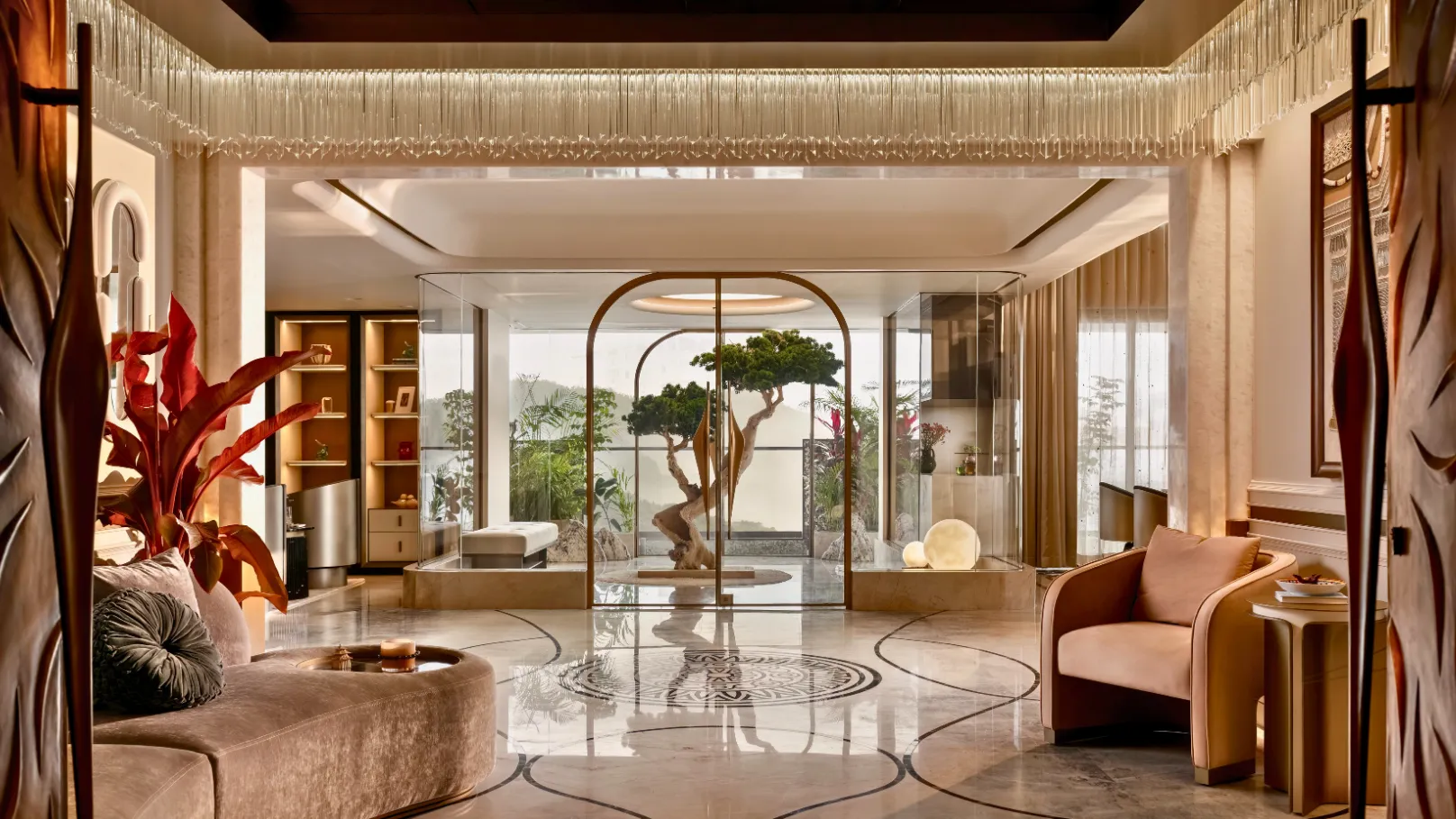
A home can tell you a lot about the people who live there. Not through expensive finishes or carefully styled shelves, but through the little choices that make everyday life easier. A kitchen positioned where everyone naturally gathers. A chair beside a window that catches the afternoon sun. A dining room that feels welcoming enough for a quiet meal but comfortable enough for a long evening with friends.
These things don’t happen by accident.
The best residential interiors are usually shaped around the people who will live in them. Their habits, preferences, routines, memories, and even their slightly messy realities all have a place in the design. After all, nobody actually lives the way a showroom looks.
This is where interior design becomes more interesting. It stops being simply about how a room appears and starts asking a bigger question: how should this home make everyday life feel?
Design Begins With Listening
Before furniture is selected or finishes are ordered, there should be a conversation.
A good designer wants to know how the homeowners spend their time. Maybe mornings begin with everyone crowded around the kitchen island. Perhaps weekends revolve around entertaining. Maybe one person works from home and needs quiet, while another prefers an open, social environment.
There are also less obvious questions. Where do shoes end up? Where does mail collect? Does anyone enjoy reading? Is there a hobby that needs dedicated storage? Are there pieces of furniture or artwork that already carry emotional meaning?
These details become the foundation for shaping the art of living through design. It isn’t about creating a lifestyle that looks impressive from the outside. It’s about creating rooms that support the life already happening inside them.
Sometimes the smallest observation leads to the most useful design decision.
Seeing the Whole Home
One room rarely exists in isolation.
The way a person moves from the entryway to the kitchen affects how both spaces feel. A living room may need to connect naturally with an outdoor terrace. A bedroom should feel separate from noisier parts of the house. Even a hallway can influence the experience of an entire floor.
This is why residential design benefits from thinking in terms of relationships rather than individual rooms.
Colors can repeat subtly. Wood tones can connect spaces. Lighting can create continuity. Architectural details can echo one another without becoming repetitive. The result doesn’t have to look identical from room to room. In fact, a little variation keeps a home interesting.
What matters is that there is a thread running through it.
The Importance of Proportion
Proportion is one of those things people often feel before they understand it.
Walk into a room with furniture that’s too large, and you may immediately feel crowded. Put tiny pieces into a very large room, and the space can feel oddly empty. Even a beautiful piece can look wrong if its scale doesn’t relate to the architecture around it.
This becomes particularly important in high end residential design, where rooms, furnishings, architectural details, and materials often have considerable visual presence. Luxury isn’t simply about making everything bigger. It’s about knowing how much is enough.
A generous sofa might be perfect in one living room and completely overwhelming in another. A dramatic light fixture may suit a tall entryway but feel awkward beneath a lower ceiling.
Good proportion creates a sense of ease. You don’t necessarily notice it. You just know the room feels right.
Comfort Should Never Be an Afterthought
A beautiful home still needs to be comfortable.
That sounds obvious, yet it’s surprisingly easy to prioritize appearance over experience. A chair might look fantastic but be unpleasant to sit in. A coffee table might photograph beautifully but leave too little room to move around. A rug might be the perfect color but too small for the seating arrangement.
Real homes are used.
People stretch out on sofas. Guests pull chairs closer together. Children sit on floors. Someone inevitably carries a plate from the kitchen while another person is standing exactly where they shouldn’t be.
Good design anticipates those moments.
Comfort also involves temperature, lighting, acoustics, storage, and privacy. A room can be visually beautiful and still feel uncomfortable if it echoes badly or receives harsh glare in the afternoon.
The senses matter as much as the eyes.
Bringing Personality Into the Interior
There is a temptation to make every room perfectly coordinated. Matching finishes can certainly create cohesion, but too much sameness can remove character.
Personal interiors usually have a few surprises.
Perhaps an antique cabinet sits beside contemporary seating. Maybe a bold piece of artwork breaks up a quiet palette. A vintage lamp might become more interesting precisely because everything around it is modern.
These combinations create tension in a good way.
They also make a home feel collected rather than purchased all at once.
This is where custom interiors can offer something particularly meaningful. Custom design allows furnishings, materials, proportions, and details to respond directly to the architecture and the homeowner’s preferences. Instead of asking a room to accommodate whatever happens to be available, the design can be developed around what the space genuinely needs.
Practicality Can Be Beautiful
Storage is probably one of the least glamorous topics in interior design, but it has enormous influence on how a home feels.
When everything has somewhere to go, rooms breathe more easily.
Built-in cabinetry can conceal technology and everyday clutter. Entry storage can prevent bags and shoes from taking over the hallway. Bedroom storage can be designed around actual clothing habits instead of generic assumptions.
The same principle applies to electrical planning and technology. Outlets should be where people need them. Lighting controls should make sense. Charging areas should be convenient rather than hidden behind furniture.
These details rarely appear in photographs.
They matter anyway.
Designing for Change
A home should have enough flexibility to evolve.
A young family may eventually need different bedroom arrangements. A guest room might become a home office. Someone who works remotely today may have an entirely different routine five years from now.
Furniture that can move, rooms that can serve multiple purposes, and storage that can adapt make these changes easier.
This doesn’t mean every room should be bland or temporary. Quite the opposite. Strong design can provide a stable foundation while allowing life to change around it.
A home should grow with its occupants, not constantly force them to work around decisions made years earlier.
The Value of Craftsmanship
Beautiful design depends on execution.
A carefully considered room can lose its impact if the cabinetry is poorly fitted, upholstery isn’t properly finished, or installation feels rushed. Craftsmanship gives design its physical reality.
Quality is often found in places people don’t immediately notice: the alignment of doors, the feel of a drawer, the way a curtain falls, the precision of a seam, the finish of a wood edge.
These details become more noticeable with time because people interact with them every day.
Good craftsmanship isn’t about making everything flashy. It’s about making things feel solid, considered, and dependable.
Creating a Home That Feels Natural
Perhaps the greatest compliment a home can receive is that it feels effortless.
Not empty. Not overly styled. Just natural.
The furniture makes sense. The lighting changes comfortably through the day. People know where to sit. There is storage where it’s needed. Personal objects have space without overwhelming the room.
And somehow, everything feels connected.
That’s the real promise of thoughtful residential design. It isn’t simply about creating beautiful surroundings. It’s about creating a setting that supports conversations, routines, celebrations, quiet mornings, busy evenings, and all the ordinary moments in between.
A house becomes a home gradually.
It happens through use, memory, and familiarity. Design can give that process a strong beginning, but the people who live there are what ultimately give the rooms their meaning.
The goal, then, isn’t perfection.
It’s belonging.
When a home feels as though it understands the people inside it, design has done something far more valuable than making a room look good. It has made everyday life feel a little more natural — and that’s a kind of beauty that lasts.