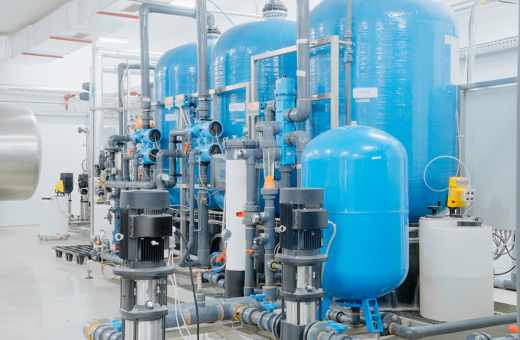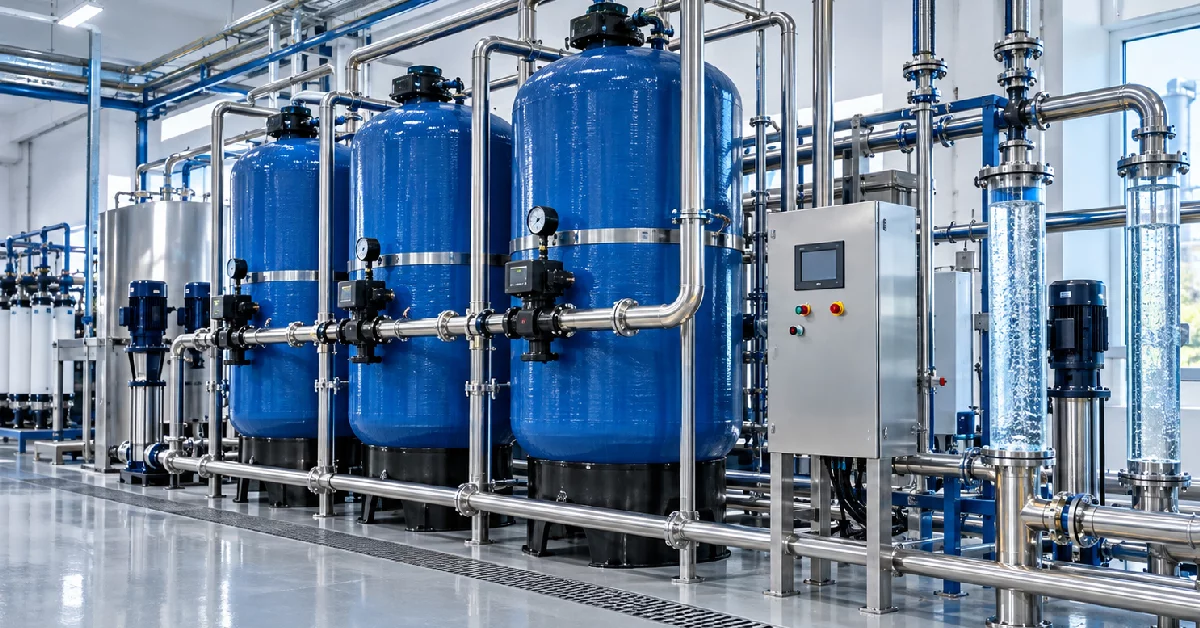
Water quietly supports an enormous amount of daily business. It cleans equipment, prepares food, fills ice machines, supports heating systems, supplies restrooms and, in many workplaces, becomes part of the product itself. Because it is so ordinary, it’s easy to forget how much depends on having a dependable supply.
The trouble usually starts when water quality begins affecting something else.
A boiler develops efficiency problems. A coffee machine needs attention more often. Faucets collect deposits. Water pressure drops. A glass of drinking water doesn’t taste quite as fresh as it used to. None of these issues should automatically be blamed on filtration, but they can be signs that the incoming water and the treatment strategy deserve a closer look.
For commercial properties, good water treatment isn’t about chasing perfectly pure water. It’s about controlling the characteristics that matter for the job at hand.
The Hidden Cost of Scale
One of the most persistent water-quality concerns in commercial facilities is mineral scale.
Hard water contains dissolved calcium and magnesium. When water is heated or conditions change, these minerals can precipitate and form deposits on internal surfaces.
Over time, scale buildup in boilers and equipment can interfere with heat transfer and reduce operating efficiency. In heavily used facilities, even relatively small deposits can become an expensive nuisance.
Restaurants, hotels, laundries, manufacturing operations and other businesses that heat substantial quantities of water can be especially sensitive to scale.
This doesn’t mean every facility needs a water softener or another specific treatment system. The appropriate approach depends on the water chemistry, equipment design and operating conditions. Testing is the sensible first step.
Sediment Can Create a Different Kind of Problem
Not every water-quality issue comes from dissolved minerals.
Some water contains suspended particles that can make it look cloudy or contribute to clogged screens, valves and other components. Older plumbing or certain source-water conditions can introduce additional particulate material into the supply.
A properly selected sediment filter can help capture sediment and particulate matter before it reaches sensitive equipment.
The filter’s micron rating, capacity and flow requirements matter, though. A filter that’s too fine may restrict flow unnecessarily, while one that’s too coarse may allow unwanted particles to pass through.
Again, bigger isn’t automatically better. The filter needs to match the actual conditions.
Chlorine Has a Purpose, But It Can Still Matter
Municipal water supplies commonly use disinfectants to control microorganisms. That’s an important part of maintaining safe public water supplies.
At the same time, businesses may notice the taste or odor associated with disinfected water. Some processes and equipment can also be sensitive to particular water characteristics.
Chlorine and chemical residuals may therefore become a consideration when selecting treatment for drinking water, food preparation or certain commercial processes.
Activated carbon is commonly used to reduce chlorine taste and odor, although the right media and contact time depend on the application.
A commercial filtration system should never be selected solely because it removes chlorine. The real question is whether chlorine is actually a problem for the business and whether reducing it is compatible with the intended use.
Start With Water Testing
It’s tempting to begin the process by comparing filtration equipment.
That’s usually backward.
Testing the incoming water first provides a clearer picture of what you’re dealing with. Depending on the application, testing may examine hardness, dissolved solids, pH, chlorine, iron, sediment and other relevant characteristics.
For private wells, testing can be particularly important because water chemistry can vary with local conditions and over time.
A commercial water-treatment professional can use the results to help identify appropriate technologies and system capacity.
Without that information, choosing equipment becomes a guessing game.
Different Businesses Have Different Priorities
A restaurant and a manufacturing facility can both need filtered water, but their requirements may have very little in common.
A restaurant may care heavily about taste, ice quality, coffee equipment and scale control. A hotel may need consistent water for guest rooms, laundry and foodservice. A manufacturing facility might have precise requirements for a production process.
Even two businesses in the same industry may have different needs.
Water treatment should therefore be designed around the actual application. A system built around someone’s generic checklist isn’t necessarily the right system for your facility.
Protecting Heat-Using Equipment
Heating water changes the equation.
When water is heated, dissolved minerals can become more likely to form deposits. Boilers, water heaters, steam equipment and other heat-transfer surfaces can be vulnerable to this buildup.
The consequences can range from reduced efficiency to increased maintenance requirements.
In facilities where hot water is used continuously, preventing or controlling scale can have a meaningful financial impact. But treatment needs to be carefully matched to the equipment. Some systems may require softened water, while others have different water-quality specifications.
Manufacturers’ requirements should be considered before treatment changes are made.
Filtration Capacity Needs to Match Demand
Commercial water use can be surprisingly uneven.
A building might consume a modest amount of water for several hours and then experience a major spike. Restaurants have busy meal periods. Hotels have morning rushes. Industrial facilities may have production cycles that create sudden demand.
A filter needs enough capacity to handle those peaks without creating unacceptable pressure loss.
This is why system sizing should consider both average and maximum flow. Looking only at daily gallons can miss the most important part of the equation.
A properly sized system should provide the required treatment while maintaining practical flow for the facility.
Maintenance Is Part of the Treatment Strategy
Even excellent equipment needs attention.
Filters become loaded. Resin eventually needs regeneration or replacement. Valves and controls can wear. Connections may require inspection.
A commercial maintenance plan should account for actual water usage and operating conditions.
Waiting for a noticeable problem before servicing equipment can be costly. By the time water pressure has dropped significantly or a machine starts malfunctioning, the treatment equipment may have been operating outside its ideal range for some time.
Scheduled inspections and filter changes are often much easier to manage than emergency repairs.
Keep an Eye on Pressure
Water filtration introduces some resistance to flow.
As filters collect material, that resistance can increase. If the system isn’t properly sized, or if filters aren’t replaced when needed, pressure problems may become noticeable at points of use.
Pressure gauges before and after filtration can provide useful information in some installations. A growing pressure difference may indicate that a filter is becoming restricted.
It’s a simple observation, but it can give facility managers an early warning before employees start complaining about slow water.
Treatment Doesn’t Have to Mean Treating Everything
One common misconception is that every drop of water in a commercial building needs the same treatment.
That isn’t necessarily true.
A business might use one treatment approach for general water and another at a specific point of use. Drinking water may need different filtration from water feeding a boiler or production process.
Point-of-use treatment can sometimes be a practical way to address a specific concern without installing a whole-building system.
The right approach depends on the facility’s layout and water requirements.
Efficiency Matters Beyond Water Quality
Operating costs deserve attention, too.
Some treatment systems use water during backwashing or regeneration. Reverse osmosis systems can produce reject water. Pumps and other equipment may consume electricity.
Over several years, these operating costs can become substantial.
When comparing systems, look beyond the purchase price. Consider replacement filters, service requirements, water consumption, energy use and expected equipment life.
A slightly higher initial investment can make sense if the system is more appropriate for the application and less expensive to operate.
Planning for the Long Term
Commercial water treatment works best when it is treated as part of facility management rather than a one-time purchase.
Water conditions can change. Business operations can change. Equipment gets replaced. A restaurant may expand its kitchen. A hotel may add rooms. A manufacturing line may increase production.
Those changes can alter water demand and treatment requirements.
Periodic testing and system reviews help keep the treatment strategy aligned with the business.
Good Water Treatment Is Mostly About Prevention
The most effective commercial water treatment often works quietly in the background.
It helps limit scale before deposits become a serious problem. It captures particles before they reach sensitive components. It can improve taste where that’s important. And, when properly sized and maintained, it provides consistent water without constantly demanding attention.
The smartest place to begin isn’t with a product catalog. It’s with the water itself.
Test it. Understand the equipment that depends on it. Look at real usage patterns, including peak demand. Then choose treatment technology that solves a clearly identified problem.
That approach may not sound glamorous, but it works.
And in a busy commercial environment, preventing tomorrow’s water problem is usually a lot easier — and cheaper — than fixing it once everything has already gone wrong.