There are household chores that seem to multiply overnight. The dishes are done, yet the glasses have spots. The bathroom was cleaned yesterday, but the faucets already look dull. You add detergent to the washing machine, wondering whether you’re using too much or not enough.
Sometimes the problem isn’t your cleaning routine at all.
The water running through your home can have a surprisingly noticeable effect on cleaning, appliances, and even how much product you use. Hard water, which contains dissolved minerals such as calcium and magnesium, can leave deposits behind and change the way soap and detergents behave.
Once you understand what’s happening, everyday cleaning starts to make a little more sense.
Why Hard Water Changes the Cleaning Experience
Hard water isn’t necessarily something you can see when you turn on the faucet. It usually looks perfectly normal.
The trouble becomes obvious after the water dries.
Calcium and magnesium can remain behind on sinks, shower doors, dishes, and fixtures. Repeated exposure may create a layer of mineral residue that becomes increasingly difficult to remove.
Hard water can also interact with soap, making it harder to create a satisfying lather and rinse cleanly.
That’s why some households find themselves using more detergent or cleaning products than they expected. They’re trying to compensate for a water condition they may not even realize they have.
Less Soap Can Be a Real Benefit
One of the everyday advantages homeowners may notice after addressing hard water is less soap and detergent usage.
When water is softened, calcium and magnesium levels are reduced. Soap can then behave differently, often allowing households to use smaller amounts while still getting the cleaning results they expect.
This doesn’t mean you should immediately cut your detergent in half.
Start gradually and follow the detergent manufacturer’s recommendations. The amount you need depends on the product, load size, soil level, water temperature, and other factors.
Still, if you’ve been using large amounts of soap simply because it never seems to rinse properly, softer water may change the equation.
Why Glassware Gets So Many Spots
Few things make a clean kitchen look less clean than cloudy glasses.
You unload the dishwasher expecting everything to sparkle, only to find tiny white marks covering the glassware. Sometimes you can wipe them away. Other times they seem determined to stay.
Water hardness can contribute to these deposits, especially when water evaporates from the surface during or after washing.
Of course, dishwasher settings, detergent, rinse aid, and loading technique matter too.
Before replacing an expensive appliance, consider checking the water.
A water test can tell you whether hardness is high enough to be contributing to the problem.
Softer Water and Dishwashing
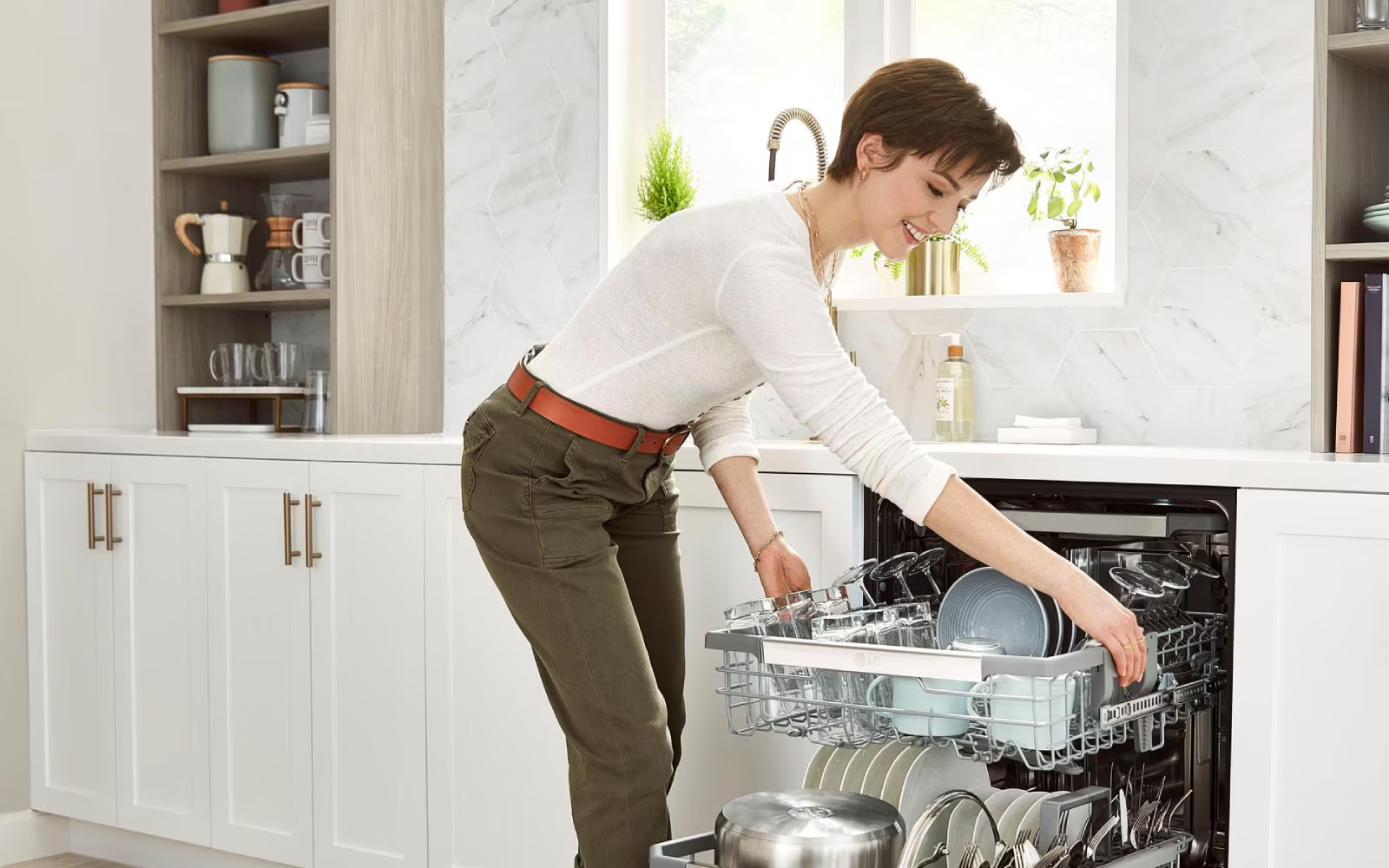
Once hardness is reduced, many households notice changes in the way their dishwasher performs.
Detergent can rinse differently, and mineral deposits may be less noticeable. The result may be cleaner-looking glassware and fewer deposits on the interior of the machine.
The goal isn’t simply making dishes look prettier.
Reducing mineral exposure can also make routine dishwasher maintenance easier. Less residue means fewer deposits to scrub away and potentially less need for frequent descaling, depending on the appliance and water conditions.
That can save time, which is sometimes more valuable than saving a few dollars on cleaning products.
What Happens Inside Your Appliances?
Hard water doesn’t only leave marks on surfaces.
Minerals can also accumulate inside water-using appliances, particularly where water is heated. Water heaters, dishwashers, coffee makers, humidifiers, and other equipment can experience mineral deposits depending on their design and the home’s water conditions.
Over time, those deposits may affect performance.
This is where improved appliance efficiency can become part of the conversation around water treatment.
It doesn’t mean a softener guarantees longer appliance life or a specific percentage of energy savings. Real-world results vary.
But reducing excessive hardness can reduce the conditions that encourage scale formation, which may make maintenance easier and help equipment operate under more favorable conditions.
Don’t Assume Every Water Problem Is Hard Water
It’s important not to blame everything on hardness.
If your water smells strange, has a metallic taste, contains sediment, or has another unusual characteristic, there could be a different issue involved.
A water softener is designed primarily to address hardness. It isn’t a universal filtration system.
Testing helps determine what’s actually happening.
Depending on the water source, testing may evaluate hardness, iron, pH, sediment, and other characteristics. Private well owners may have additional reasons to monitor their water regularly.
Treatment decisions should follow the evidence rather than the other way around.
Softer Water Doesn’t Mean No Cleaning
A water softener isn’t a substitute for regular cleaning.
You will still need to clean shower doors, sinks, counters, dishes, and appliances.
The difference is that you may be dealing with fewer mineral deposits along the way.
Think of it as making the job easier rather than eliminating the job entirely.
If years of hard-water scale are already present, those deposits may need to be removed manually. Once the water condition is addressed, keeping the surfaces clean can become considerably less frustrating.
The Kitchen Is Where You May Notice It First
Kitchens tend to reveal water problems quickly.
Faucets get used constantly. Dishes are washed every day. Coffee makers and kettles repeatedly heat water. Glassware shows even tiny amounts of residue.
If you regularly see white spots on dishes or mineral buildup around the faucet, it’s worth investigating.
You may find that a combination of appropriate dishwasher settings, rinse aid, routine cleaning, and water treatment produces much better results than simply adding more detergent.
Small changes can add up.
Consider the Whole Household
If hardness is affecting the kitchen, chances are it isn’t limited to the kitchen.
The same water flows through bathrooms, laundry equipment, water heaters, and other fixtures.
That means homeowners should think about whether the goal is targeted treatment or treating the entire household supply.
A point-of-use system may make sense for a specific drinking-water concern. A whole-home softener can be more appropriate when hardness affects multiple fixtures and appliances.
The choice depends on the problem and how widespread it is.
Choosing a Softener Carefully
If testing confirms that hard water is the main concern, selecting the right softener matters.
Capacity should be based on water hardness and household usage. A system that’s too small may regenerate frequently, while an unnecessarily large system can cost more than needed.
Ask about salt consumption, regeneration settings, maintenance, installation, and replacement components.
Don’t choose solely on the initial price.
A system that’s efficient and properly sized may provide better value over several years than a cheaper system that requires constant attention.
Maintenance Still Matters
Softened water doesn’t mean you can forget about the equipment.
Salt levels need to be monitored on systems that use salt. Settings should be checked periodically, and professional service may be appropriate depending on the equipment.
If you start noticing scale again, don’t immediately assume the water problem has returned.
Check whether the system has salt, whether the settings have changed, and whether service is due.
A little routine attention can keep the system performing properly.
What “Spot-Free” Really Means
Everyone loves the idea of spot-free dishes, especially after spending time loading and unloading a dishwasher.
But water treatment isn’t the only factor.
Dishwasher performance also depends on detergent, rinse aid, water temperature, loading patterns, and the condition of the appliance itself.
Softening the water can reduce one important source of mineral spotting, but it won’t correct every possible dishwasher issue.
That’s why a practical approach works best: address water hardness, then make sure the appliance itself is set up correctly.
A Small Change With Everyday Benefits
Water treatment doesn’t always produce a dramatic before-and-after moment.
Instead, the benefits can show up gradually.
You notice fewer spots on glasses. The bathroom faucet stays cleaner. You don’t need quite as much soap. Your coffee maker doesn’t seem to accumulate scale as quickly.
None of these things is revolutionary on its own.
Together, though, they can make household maintenance feel a little less demanding.
If hard water is creating problems in your home, start with testing rather than assumptions. Understand the level of hardness, consider your household’s actual needs, and choose equipment that fits those conditions.
The best treatment system is rarely the biggest or most complicated one. It’s the one that quietly solves the problem without creating a new one.
And when clean dishes really do look clean, that’s a pretty satisfying result.